











The Double-Edged Sword of Tirzepatide: Efficacy Meets Safety. The dual-agonist drug Tirzepatide has rapidly gained popularity for treating type 2 diabetes and supporting weight management, driving impressive reductions in HbA1c and body weight. Nonetheless, despite its benefits, the medication carries important safety and contraindication concerns that both patients and prescribers must heed. Research 1 shows that the overall safety profile of tirzepatide is similar to GLP-1RAs, except for the hypoglycemia.
Tirzepatide offers transformative benefits, but it isn’t right for everyone. At Vita Bella, our mission is to guide you toward informed, doctor-supported wellness decisions. Explore essential safety notes, understand your risk factors, and take confident steps toward a healthier, more balanced future.
What are the Tirzepatide Uses and Benefits?
Tirzepatide is approved for improving glycaemic control in adults with type 2 diabetes mellitus as an adjunct to diet and exercise, and it shows substantial potential for weight loss even when used for obesity, as explained by the review 2.
According to the research evaluation 3, it activates both GIP (glucose-dependent insulinotropic polypeptide) and GLP-1 (glucagon-like peptide-1) receptors, thereby enhancing insulin secretion, reducing glucagon release, slowing gastric emptying, and promoting satiety. However, even with strong efficacy, there are specific individuals for whom tirzepatide may pose significant risks.
Who Should Avoid Tirzepatide? Key Contraindications to Know
Tirzepatide should be avoided by those with severe gastrointestinal disorders like gastroparesis or anyone allergic to its components. Always consult your healthcare provider before starting Tirzepatide to ensure it’s safe and suitable for your health profile. The major contraindications for tirzepatide include:
A personal or family history of Medullary Thyroid Carcinoma (MTC) or a diagnosis of Multiple Endocrine Neoplasia Syndrome Type 2 (MEN 2).
Known serious hypersensitivity (allergy) to tirzepatide or any of its components.
Severe or uncontrolled gastrointestinal disorders, such as gastroparesis, where delayed gastric emptying could pose an added risk.
What are High-Risk Conditions Requiring Extra Caution for Tirzepatide?
High-risk conditions requiring extra caution with Tirzepatide include a history of pancreatitis, gallbladder disease, or significant kidney or liver impairment. Patients using insulin or sulfonylureas should also be monitored closely due to an increased risk of hypoglycemia. Certain medical conditions increase risk and require careful benefit–risk evaluation when considering tirzepatide:
History of pancreatitis or gallbladder disease, since GLP-1/GIP-agonist therapies have reported gallbladder and pancreatic events.
Significant renal or hepatic impairment, where volume depletion (via nausea/vomiting) may worsen outcomes.
Research 1 demonstrated that dosage escalation was unable to increase the incidence of hypoglycemia, severe gastrointestinal adverse events, or overall adverse events. In contrast, 10 mg and 15 mg of tirzepatide were linked to increased rates of nausea, discontinuation, and injection-site reactions compared to 5 mg. At doses ranging from 5 to 15 mg, the rates of vomiting and diarrhea were dose-dependent.
Patients concurrently using insulin or sulfonylureas face a higher hypoglycaemia risk when tirzepatide is added.
Diabetic retinopathy: Some trials noted worsening of retinopathy while on potent glucose-lowering therapies, so monitoring is advised.
What are Drug Interactions and Special Populations for Tirzepatide?
Pregnancy and breastfeeding: Human data 4 are insufficient to ensure the safety of tirzepatide during pregnancy or lactation.
Children/adolescents: Safety and efficacy have not been established in individuals under 18 years.
Concomitant use with other GLP-1-receptor agonists, dual weight-loss therapies, or insulin secretagogues may increase the risk of adverse events.
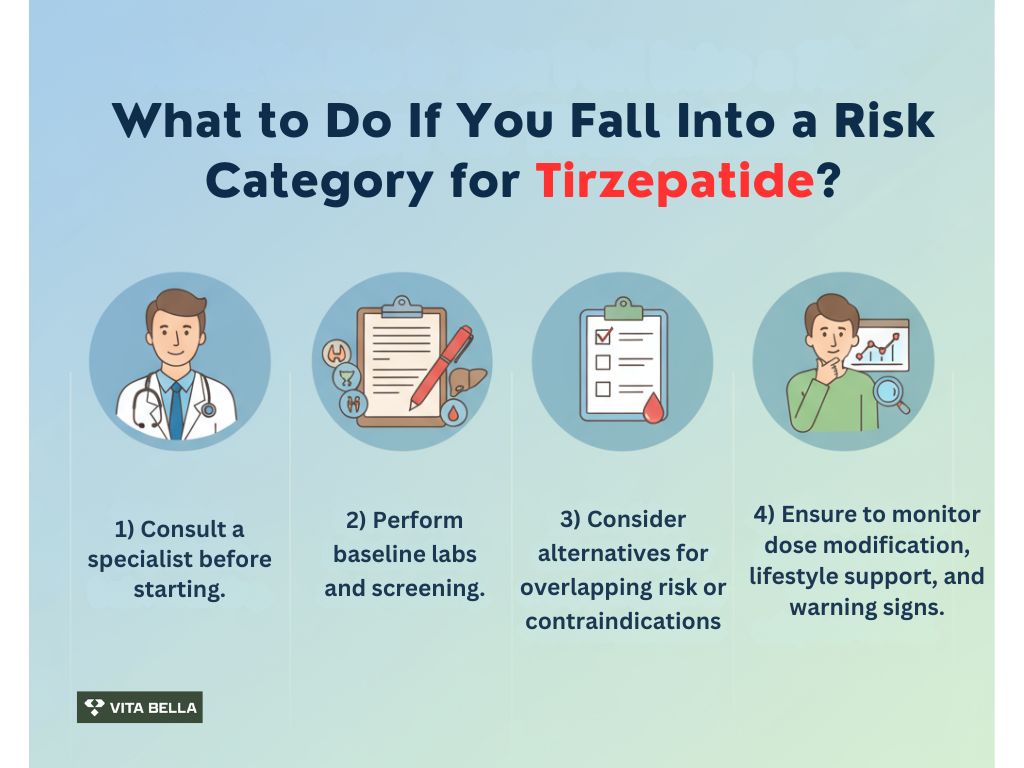
What are the Monitoring and Warning Signs to Watch For Tirzepatide?
Patients using Tirzepatide should monitor for warning signs such as persistent nausea, vomiting, or severe abdominal pain, which may indicate pancreatitis. Other symptoms like yellowing of the skin, dark urine, or unusual fatigue could signal gallbladder or liver issues. Both clinicians and patients must remain vigilant for key warning signs:
Neck mass, persistent hoarseness, or dysphagia may signal thyroid C-cell tumour growth.
Severe abdominal pain, nausea, and vomiting may suggest acute pancreatitis.
Upper-right abdominal pain or jaundice may indicate gallbladder disease.
Signs of hypoglycaemia (shakiness, confusion), especially if combined with insulin or sulfonylurea.
Nausea, vomiting, diarrhea, or dehydration in someone with kidney impairment, volume depletion may lead to acute kidney injury.
Don’t Gamble with Your Health - Understand Tirzepatide Before You Begin
Misuse or misunderstanding of powerful medications can cause setbacks that slow your progress. That’s why Vita Bella puts education first, offering science-backed insights, medical guidance, and personalized wellness support to help you make informed, safe decisions that protect your results and your wellness through Tirzepatide.
With Vita Bella, you gain more than information; you gain confidence in every health decision you make. Our mission is to help you understand your body, your options, and your safety before you begin. Together, we turn awareness into action, guiding you toward a healthier, more empowered future.
FAQs
Can everyone safely use Tirzepatide for weight loss or diabetes control?
No, Tirzepatide is not safe for everyone. Individuals with a personal or family history of medullary thyroid carcinoma, severe gastrointestinal disorders, or hypersensitivity to the drug should avoid it. Proper screening by a healthcare professional is vital before starting therapy to prevent adverse effects.
Is Tirzepatide safe for people with kidney or liver problems?
No, those with significant kidney or liver impairment must exercise caution. Tirzepatide can cause dehydration through nausea or vomiting, potentially worsening renal or hepatic function. Doctors may recommend dose adjustments or alternative treatments after evaluating baseline organ health and ongoing hydration status to ensure safety.
Can pregnant or breastfeeding women use Tirzepatide safely?
No, human data on Tirzepatide use during pregnancy or lactation are insufficient. Because of unknown effects on fetal or infant development, healthcare experts strongly advise avoiding it during these stages. Women planning pregnancy should consult their physician to explore safer, evidence-based treatment options instead.
Should people with pancreatitis or gallbladder issues take Tirzepatide?
No, individuals with a history of pancreatitis or gallbladder disease should avoid Tirzepatide. The medication has been linked to pancreatic inflammation and gallbladder complications in clinical settings. Always discuss your medical history with a qualified professional to minimize risks and choose appropriate alternatives.
References:
Meng, Z., Yang, M., Wen, H., Zhou, S., Xiong, C., & Wang, Y. (2023). A systematic review of the safety of tirzepatide — a new dual GLP-1 and GIP agonist: Is its safety profile acceptable? Frontiers in Endocrinology, 14. https://doi.org/10.3389/fendo.2023.1121387
Liu, L., Shi, H., Xie, M., Sun, Y., & Nahata, M. C. (2025). The efficacy and safety of tirzepatide in patients with diabetes and/or obesity: Systematic review and meta-analysis of randomized clinical trials. Pharmaceuticals, 18(5), 668. https://doi.org/10.3390/ph18050668
Naseralallah, L., & Aboujabal, B. (2023). Profile of tirzepatide in the management of type 2 diabetes mellitus: Design, development, and place in therapy. Expert Opinion on Pharmacotherapy, 24(4), 407-418. https://doi.org/10.1080/14656566.2023.2181074
U.S. Food and Drug Administration, Division of Epidemiology I. (2022, April 29). Subject: Active Risk Identification and Analysis (ARIA) sufficiency assessment for Medullary Thyroid Carcinoma (MTC) following tirzepatide use for chronic weight management. Drug Name(s): Zepbound (tirzepatide) injection for subcutaneous use; Application Type/Number: NDA 217806. Docket/Reference ID: 4976240. https://www.accessdata.fda.gov/drugsatfda_docs/nda/2024/217806Orig1s000OtherR.pdf
QUICK SUMMARY:
Here are the key takeaways about who should probably steer clear of Tirzepatide (and why!):
Tirzepatide: The Need-to-Know Safety Rundown
It's powerful, but not for everyone. Tirzepatide is great for type 2 diabetes and weight loss, but you gotta be smart about safety first.
Who Should Absolutely AVOID Tirzepatide (The Hard No's):
Thyroid Cancer Risk: If you or anyone in your family has ever had Medullary Thyroid Carcinoma (MTC) or Multiple Endocrine Neoplasia Syndrome Type 2 (MEN 2), this medication is off-limits.
Serious Allergy: If you know you're allergic (hypersensitive) to tirzepatide or any of its ingredients, don't take it.
Severe Stomach Issues: If you have severe, uncontrolled GI problems like gastroparesis (delayed stomach emptying), Tirzepatide could make things riskier.
Who Needs to Be SUPER Careful (High-Risk Situations):
Pancreatitis or Gallbladder History: If you've had issues with your pancreas or gallbladder before, talk to your doctor. GLP-1/GIP drugs have been linked to problems here.
Kidney or Liver Troubles: If your kidneys or liver aren't in great shape, the dehydration from potential side effects like nausea/vomiting could make things much worse. Caution is key!
Already on Other Meds: If you are also taking insulin or sulfonylureas, you have a much higher risk of hypoglycemia (low blood sugar), so you need close monitoring.
Eye Issues: If you have Diabetic Retinopathy, some potent glucose-lowering drugs have caused it to worsen, so keep an eye on things!
Special Populations & Interactions:
Pregnancy/Breastfeeding: We don't have enough human data, so experts strongly advise against using it if you are pregnant or breastfeeding.
Under 18: Safety and effectiveness haven't been confirmed for kids and teens.
Other GLP-1 Drugs: Mixing tirzepatide with other GLP-1 receptor agonists or dual weight-loss therapies might increase your risk of side effects.
Watch Out For These Warning Signs (Tell Your Doctor ASAP):
Thyroid trouble: A lump in your neck, constant hoarseness, or difficulty swallowing.
Pancreatitis: Severe stomach pain, nausea, and vomiting.
Gallbladder/Liver: Upper-right abdominal pain or jaundice (yellowing skin/eyes).
Low Blood Sugar: Shakiness, confusion (especially if on insulin or sulfonylurea).
Dehydration/Kidney Issues: Nausea, vomiting, or diarrhea, particularly if you have underlying kidney problems.