



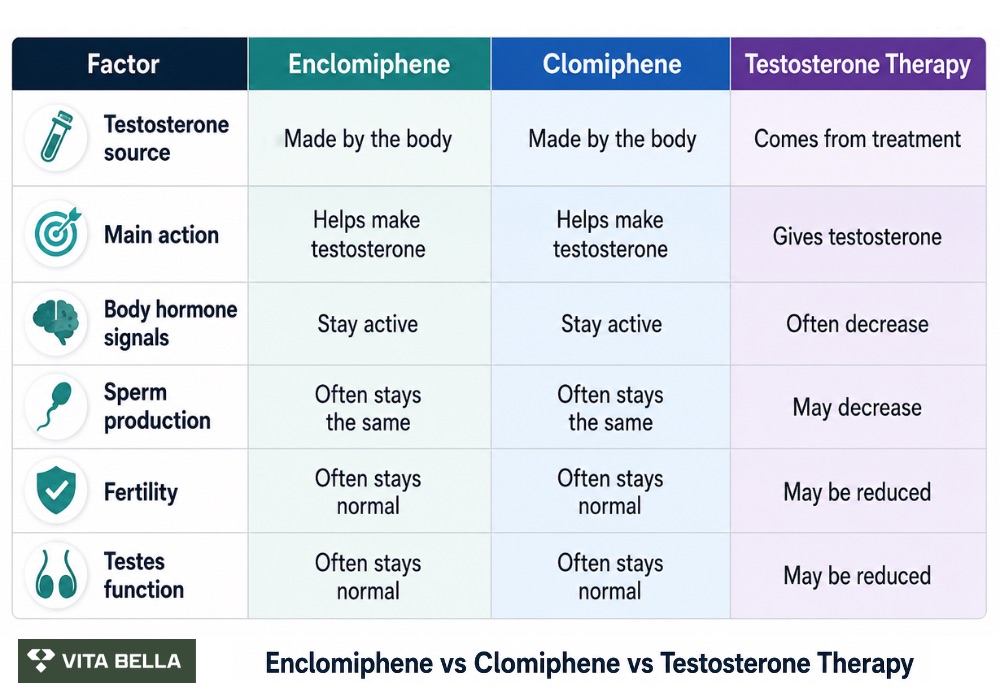
Enclomiphene helps your body make more testosterone naturally. It works by increasing signals between your brain and testes. Unlike TRT, it does not replace testosterone from an outside source. As a result, sperm production often stays normal. Therefore, many men choose enclomiphene to improve energy, libido, and hormone levels while protecting fertility.
At Vita Bella, we focus on finding the reason behind your symptoms. We review your health history, symptoms, and lab results. This helps us create a plan that fits your needs. If needed, we may use Enclomiphene to help your body make more testosterone naturally. We also guide you on sleep, exercise, nutrition, and daily habits. Our goal is to help you improve hormone health, feel better, and maintain long-term results with continued support.
How Does Enclomiphene Increase Testosterone While Preserving Fertility?
Enclomiphene helps your body make more testosterone. It does not replace testosterone. Instead, it helps your brain and testes work together. This process increases two key hormones, LH and FSH. These hormones help the testes make testosterone. They also help support sperm production. As a result, many men can raise testosterone levels and still protect their fertility.
A clinical study by BJU International [1] found that enclomiphene increased testosterone, LH, and FSH levels in men with low testosterone. In comparison, testosterone therapy increased testosterone but lowered LH levels. This difference is important. LH helps the testes keep working normally. Therefore, enclomiphene may help improve testosterone levels while supporting the body’s natural hormone system and reproductive health..
Who Is an Ideal Candidate for Enclomiphene Testosterone Therapy?
Enclomiphene may help men with signs of low testosterone who want to keep their fertility. It works by helping the body make more of its own testosterone. Because of this, many younger men consider it before testosterone therapy. It may be a good option if you want better hormone levels while still supporting future family plans.
For example, you may be a good candidate if you:
Have low energy or low sex drive.
Have low or borderline testosterone levels on blood tests.
Want to keep healthy sperm production.
Are trying to have children now or later.
Want to avoid long-term testosterone therapy.
Prefer a treatment that supports natural hormone production.
However, enclomiphene is not right for everyone.
Some men have primary testicular failure.
In these cases, the testes do not respond well to hormone signals.
As a result, testosterone levels may not improve enough.
A full hormone assessment can help guide treatment choices.
Research supports the use of enclomiphene in carefully selected men. The review in Expert Opinion on Pharmacotherapy [3] found that enclomiphene raises testosterone by increasing LH and FSH levels. The review also noted that it may help maintain fertility. Therefore, it may be a useful option for men with secondary hypogonadism who want to improve testosterone levels while protecting reproductive health.
What Lab Changes Can You Expect During Enclomiphene Treatment?
Enclomiphene can change several hormone levels during treatment. In most men, testosterone levels go up. LH and FSH levels often rise as well. These hormones help the testes work properly. Some men may also have a small rise in estrogen levels. Because every person responds differently, regular blood tests help track results and guide treatment.
Ongoing Health Monitoring
Blood tests also help doctors monitor safety. In some cases, they check red blood cell levels and other health markers. These tests help ensure treatment stays on track. They also help identify any changes that may need attention. Regular monitoring allows treatment plans to be adjusted when needed.
Research shows that enclomiphene can improve hormone levels while keeping normal testicular function. The study in BJU International [4] found increases in testosterone, LH, and FSH levels during treatment. The study also found that sperm counts stayed within the normal range. These results suggest that enclomiphene may help raise testosterone levels while supporting fertility and normal reproductive function.
How Does Enclomiphene Fit Into Modern Men's Hormone Optimization Programs?
Enclomiphene plays an important role in modern hormone care. It helps the body make more of its own testosterone. Because of this, many providers use it before considering testosterone therapy. It may be a good option for men who want better hormone levels while also protecting fertility. In many cases, it fits well into a long-term health plan.
Modern hormone care looks at more than testosterone levels alone. Doctors also focus on sleep, exercise, nutrition, stress, and metabolic health. Enclomiphene can support this broader approach because it works with the body's natural hormone system. As a result, it may help improve symptoms while keeping important hormone signals active.
Research supports the use of hormone-stimulating treatments in selected men. The study Endocrinology, diabetes & metabolism [5] found increases in testosterone, free testosterone, LH, and FSH levels during treatment. The study also noted that this type of treatment is often used in men who have a current or future desire for children. These findings support the role of hormone-stimulating therapies in modern men's hormone care.
Schedule Your Hormone Optimization Consultation Today
Low testosterone can make daily life harder than it should be. You may feel tired even after a full night's sleep. Your sex drive may decline, and workouts may feel less effective. You may also struggle with poor focus, low motivation, and reduced confidence. Over time, these symptoms can affect your health and relationships.
At Vita Bella, we help you find the cause of your symptoms and build a treatment plan around your needs. If appropriate, we may recommend Enclomiphene to help support natural testosterone production while preserving fertility. We also look at factors such as sleep, nutrition, exercise, and overall wellness. With us, you receive personalized guidance and ongoing support. Contact us today and learn which hormone optimization approach is right for you.
Frequently asked questions
Many men begin to see changes in hormone levels within a few weeks of starting enclomiphene. However, the timeline can vary from person to person. Factors such as age, hormone levels, and overall health play a role. Regular blood tests help track progress and show how well the treatment is working.
Enclomiphene may be used for longer periods when a healthcare provider recommends it. Many men continue treatment to maintain healthy testosterone levels and support fertility. However, ongoing monitoring is important. Regular follow-up visits and blood tests help ensure that treatment remains safe and effective over time.
Most men tolerate enclomiphene well when used as directed. However, some people may experience mild side effects. These can include headaches, mood changes, nausea, or mild increases in estrogen levels. Regular monitoring helps identify any concerns early. Your provider can adjust treatment if side effects become bothersome.
Yes, enclomiphene often works best when combined with healthy lifestyle habits. Good sleep, regular exercise, proper nutrition, and stress management can support hormone health. These habits may also improve treatment outcomes. As a result, many hormone optimization programs include both medical treatment and lifestyle support.
Hormone levels may gradually change after stopping enclomiphene. The exact response depends on your underlying hormone health and treatment history. Some men may notice returning symptoms over time. Therefore, it is important to speak with your healthcare provider before making changes to your treatment plan.