

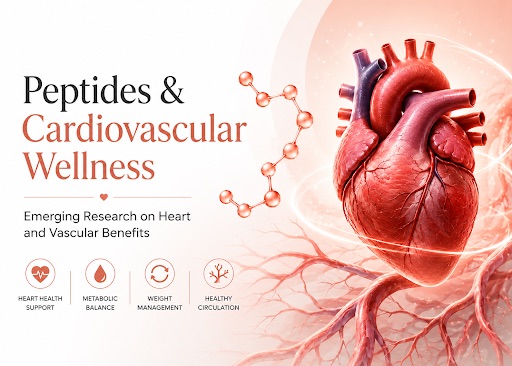
Peptides are getting more attention for their possible heart health benefits. Some studies suggest they may help support healthy blood vessels. They may also improve metabolic health and support weight loss. In addition, some GLP-1 treatments have shown heart-related benefits in people with obesity and other risk factors. However, peptides are not a replacement for healthy habits. Regular exercise, a healthy diet, good sleep, and routine medical care are still important for long-term heart health.
At Vita Bella, we help you improve your heart and overall health. We look at your health needs and personal goals. Then, we create a plan that fits your lifestyle. When appropriate, we may include options such as semaglutide. We also focus on healthy eating, weight control, and better metabolic health. Our goal is to help you build healthy habits that support long-term heart health and healthy body function.
How Do GLP-1 Peptides Support Heart and Vascular Function?
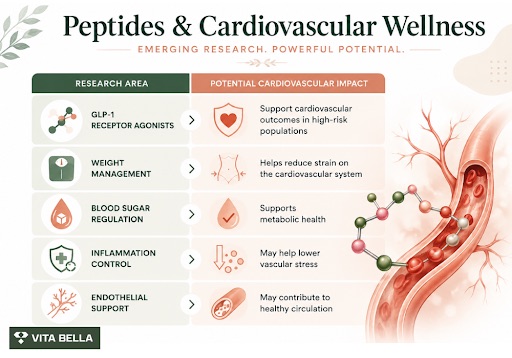
GLP-1 peptides may help support heart health by improving several key risk factors. They can help with weight loss and blood sugar control. Both play an important role in heart disease risk. Researchers are also studying their broader effects on overall metabolic health. As interest grows, GLP-1 therapies continue to gain attention as part of a heart-focused health management approach.
The review published in The New England Journal of Medicine [1] provided important evidence on GLP-1 therapies and heart health. Researchers found that efpeglenatide lowered the risk of major cardiovascular events in adults with type 2 diabetes and elevated cardiovascular risk. These findings add to growing evidence that some GLP-1 therapies may support heart health. Even so, healthy eating, regular exercise, and weight control remain important for long-term cardiovascular health.
What Potential Cardiovascular Benefits Are Researchers Exploring With Different Peptides?
Researchers are studying how different peptides may help support heart health. Many studies focus on common heart risk factors. These include extra body weight, high blood sugar, poor blood flow, and long-term inflammation. Because of this, peptides are gaining attention in health research. However, experts still need more studies to understand their full role in heart disease prevention and circulatory health.
Research continues to explore several possible benefits:
Some peptides may help reduce inflammation that can damage blood vessels.
Certain peptides may support healthy blood vessel function and blood flow.
Researchers are studying how peptides may help keep blood sugar in a healthy range.
Some peptide therapies may support normal circulation throughout the body.
GLP-1 therapies have shown benefits for weight loss and better metabolic health.
Scientists are also exploring how peptides help cells send signals and support recovery.
Recent studies show growing interest in peptides and heart health. For example, the study in The New England Journal of Medicine [2] found that semaglutide lowered major heart-related events in adults with obesity or overweight and heart disease. These findings are promising. Even so, healthy habits remain important. Regular exercise, healthy food choices, good sleep, and routine medical care still play a key role in protecting long-term heart health.
How Can Peptides Influence Endothelial Function and Cardiometabolic Risk Factors?
Peptides may help support several factors linked to heart health. Researchers are studying how they affect blood vessel health, blood sugar levels, and inflammation. These factors can raise or lower heart disease risk. Because of this, peptides have gained interest in health research. Still, scientists need more studies to understand their full benefits and long-term role in cardiovascular health.
The Connection Between Endothelial Function and Vascular Health
The endothelium is a thin layer of cells inside blood vessels. It helps control blood flow throughout the body. It also helps blood vessels open and close when needed. When these cells do not work well, blood vessels may become less healthy. This can raise cardiovascular risk over time. Healthy endothelial function is important for good circulation and heart health.
Peptides, Insulin Sensitivity, and Metabolic Balance
Good metabolic health helps protect the heart and blood vessels. High blood sugar and excess weight can increase health risks. For this reason, researchers are studying peptides that may support metabolic balance. Some peptide therapies have shown benefits for weight management and glucose control.
Inflammation, Oxidative Stress, and Cardiovascular Risk
Inflammation and oxidative stress can affect blood vessels over time. They may also reduce normal blood vessel function. As these problems increase, heart disease risk may rise. Because of this, researchers continue to study ways to support vascular health. Their goal is to better understand how different therapies may help maintain healthy blood vessels and support healthy circulation and vascular function.
Review Global Cardiology Science & Practice [3] shows that poor endothelial function can appear before heart disease develops. It is also linked with a higher risk of future cardiovascular events. These findings highlight the value of healthy blood vessels. They also explain why researchers focus on endothelial health.
What Does Current Research Say About Peptides and Cardiovascular Risk Reduction?
Research on peptides is growing. Scientists are studying how these compounds may support heart health. Much of the research looks at body weight, blood sugar, and blood vessel health. These factors can affect heart disease risk.
The New England Journal of Medicine [4] added important evidence to this field. Researchers found that liraglutide lowered major heart events in people with type 2 diabetes and high heart risk. They also found fewer deaths from heart disease in the treatment group. These results are encouraging. Healthy food, regular exercise, good sleep, and weight control remain the main steps for protecting heart health over time.
Take the Next Step Toward Better Cardiovascular Health
You may struggle with extra weight, unstable blood sugar, or other factors that affect heart health. Over time, these issues can make it harder to maintain energy and support long-term heart health. You may also feel unsure about which strategies are backed by science. As a result, building a clear plan for better heart and vascular health can feel challenging.
At Vita Bella, we help you take a proactive approach to long-term heart health. Our team offers personalized care guidance and advanced therapies, including GLP-1 options such as semaglutide when appropriate. We focus on sustainable lifestyle changes, metabolic health, and evidence-based support. Together, we can build a plan that fits your goals. Schedule a consultation to discover a personalized path toward stronger cardiovascular wellness and long-term vitality.
Frequently asked questions
No. Peptides do not replace healthy daily habits. They may support some parts of heart health. However, exercise, healthy food, good sleep, and weight control still matter most. These habits help lower many heart risks. They also support your overall health. For the best results, peptides should work alongside a healthy lifestyle, not replace it.
Some people may benefit more than others. This includes people with extra weight, high blood sugar, or other heart risk factors. However, every person is different. A medical review can help determine what is right for you. The best approach depends on your health needs, goals, and overall risk profile.
Results vary from person to person. Some people notice changes in appetite or weight within a few weeks. Others may need more time. Long-term benefits often take months to develop. Healthy habits also play a major role. Following your care plan can help improve results and support better health over time.
Blood vessels carry oxygen and nutrients throughout your body. They also help control blood flow. Healthy blood vessels support normal circulation and heart function. When blood vessels become damaged, heart disease risk may increase. Because of this, keeping blood vessels healthy is an important part of long-term heart care and wellness.
Before starting peptide therapy, review your health history and current medicines. It is also important to discuss your goals. Some health conditions may affect treatment choices. A careful review helps identify the best options for you. This step can improve safety and help create a plan that fits your needs.