

What Biotin Does in the Body
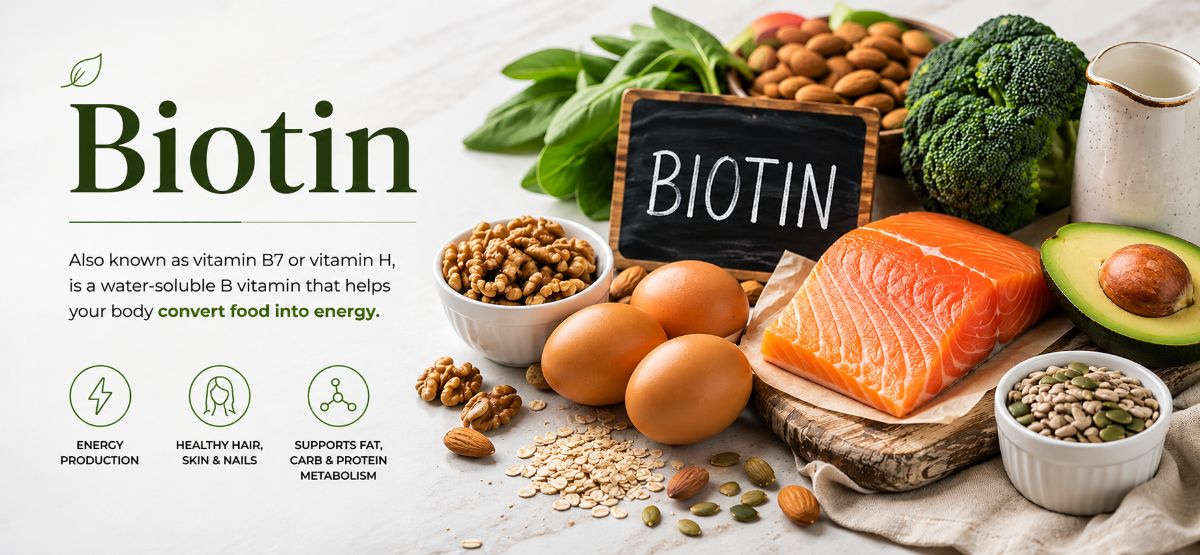
Biotin, also called vitamin B7, is a water-soluble nutrient that acts as a coenzyme for several carboxylase enzymes. These enzymes help the body build and break down fats, process certain amino acids, and manage carbohydrate metabolism. In practical terms, biotin enables key steps in fatty-acid synthesis and energy production inside cells.
Hair shafts and nails are made largely of keratin, a structural protein. The metabolic pathways that biotin supports contribute to the building blocks and energy needed for keratin production in the cells of the hair follicle and nail matrix. When biotin is severely lacking, these processes slow, and visible changes can appear: thinning hair, brittle nails, and scaly skin rashes. True deficiency is uncommon in people who eat a mixed diet, but it can occur with certain genetic enzyme defects, long-term intravenous feeding, heavy raw-egg consumption (which binds biotin), or specific medications.
Links to Collagen, Skin, and Structural Proteins
Biotin does not directly manufacture collagen the way vitamin C does. Instead, it keeps the broader metabolic machinery running so that cells can produce the proteins and lipids that form healthy skin, hair, and nails. Collagen provides the supportive matrix in the dermis, while keratin forms the outer hair fiber and nail plate. By aiding fatty-acid and amino-acid handling, biotin helps maintain the environment in which these structural proteins are assembled and maintained.
Human case reports and small studies show that correcting documented biotin deficiency often improves hair shedding, nail fragility, and skin texture. High-quality randomized trials in people who already have normal biotin levels have not consistently shown large extra gains in hair growth. Still, because the nutrient is inexpensive and has a wide safety margin at common supplemental doses, many hair-support formulas include it as a foundational component.
Why Biotin Appears in Hair-Loss Products
Biotin is one of the lowest-cost vitamins on the market. Adding it to an oral hair formula raises manufacturing cost only slightly while covering a potential nutritional gap. For individuals with borderline intake, medication-related interference, or increased demand, the extra biotin may help keep the metabolic pathways for keratin production supplied. Even when the main active ingredients target other mechanisms (such as DHT pathways or blood flow), biotin serves as low-risk metabolic support.
For this reason, biotin is frequently paired with other agents in oral hair regimens. It is not a stand-alone cure for androgenetic alopecia in people with adequate biotin status, yet its inclusion makes practical sense as part of a broader approach.
Vita Bella Oral Hair Formulas and Biotin
All of Vita Bella’s oral hair medications are paired with biotin. This ensures that the metabolic support biotin provides sits alongside the other active ingredients in each formula. For people already working on hormone balance or recovery, services available through Vita Bella can coordinate hair-support options with broader hormone and peptide evaluation when appropriate.
When additional clinical oversight is useful—especially if laboratory markers or symptoms point to hormone-related contributions to hair changes—the same teams at Vita Bella can help integrate testing and follow-up.
Important Lab-Testing Disclaimer
High-dose biotin can interfere with certain laboratory immunoassays that use biotin-streptavidin chemistry. This interference can produce falsely high or falsely low results for tests that include thyroid markers (TSH, free T4, free T3), total and free testosterone, PSA, and several other hormones and proteins. The U.S. Food and Drug Administration has issued safety communications on this topic.
If you take biotin at supplemental doses (especially several milligrams per day), tell your healthcare provider and the laboratory before blood is drawn. In many cases, stopping biotin for 48–72 hours before testing reduces the risk of inaccurate results. Never interpret hormone or thyroid labs without confirming that biotin interference has been considered.
Putting Biotin in Perspective
Biotin is an essential, inexpensive nutrient that keeps key metabolic enzymes working. When deficiency is present, correcting it can improve hair, skin, and nail quality. In people with normal levels, its benefit is more supportive than dramatic, which is why it is best viewed as one useful piece of a larger strategy rather than a single solution. Pairing it with proven approaches and accurate laboratory interpretation remains the most practical path.
References
1. Zempleni J, Wijeratne SS, Hassan YI. Biotin. Biofactors. 2009;35(1):36-46. doi:10.1002/biof.8
2. Patel DP, Swink SM, Castelo-Soccio L. A review of the use of biotin for hair loss. Skin Appendage Disord. 2017;3(3):166-169. doi:10.1159/000462981
3. Yelich A, Jenkins H, Holt S, Miller R. Biotin for hair loss: teasing out the evidence. J Clin Aesthet Dermatol. 2024;17(8):44-50.
4. U.S. Food and Drug Administration. The FDA warns that biotin may interfere with lab tests: FDA safety communication. Updated November 5, 2019.
5. Li D, et al. Association of biotin ingestion with performance of hormone and nonhormone assays in healthy adults. JAMA. 2017;318(12):1150-1160. doi:10.1001/jama.2017.13705
6. Mock DM. Biotin: from nutrition to therapeutics. J Nutr. 2017;147(8):1487-1492. doi:10.3945/jn.116.238584