Does HRT help with weight loss? Hormone replacement therapy is not a weight-loss drug, but it directly addresses the hormonal shift that makes weight management harder after estrogen declines. By restoring estrogen to a functional range, HRT can reduce visceral fat accumulation, support lean muscle mass, and improve the metabolic conditions that low estrogen disrupts. A provider-led hormone program combines lab results with symptom review to determine whether estrogen restoration fits your specific situation.
Why menopause causes weight gain in the first place
Even when diet and activity stay consistent, menopause often brings weight gain. This happens because estrogen does more than regulate reproduction. It influences where the body stores fat, how efficiently it burns calories at rest, and how well cells respond to insulin.
What estrogen decline does to fat storage and metabolism
When estrogen drops, fat storage shifts from subcutaneous tissue at the hips and thighs toward visceral fat around the abdomen. Visceral fat carries more metabolic risk. Basal metabolic rate also slows, so the body burns fewer calories even without changes to food intake, which is why the same habits produce different results after menopause.
Recommendations on menopausal hormone replacement therapy published in Minerva Ginecologica (Cagnacci et al., 2019) document these metabolic shifts and provide the clinical rationale for estrogen therapy in perimenopausal and postmenopausal women.
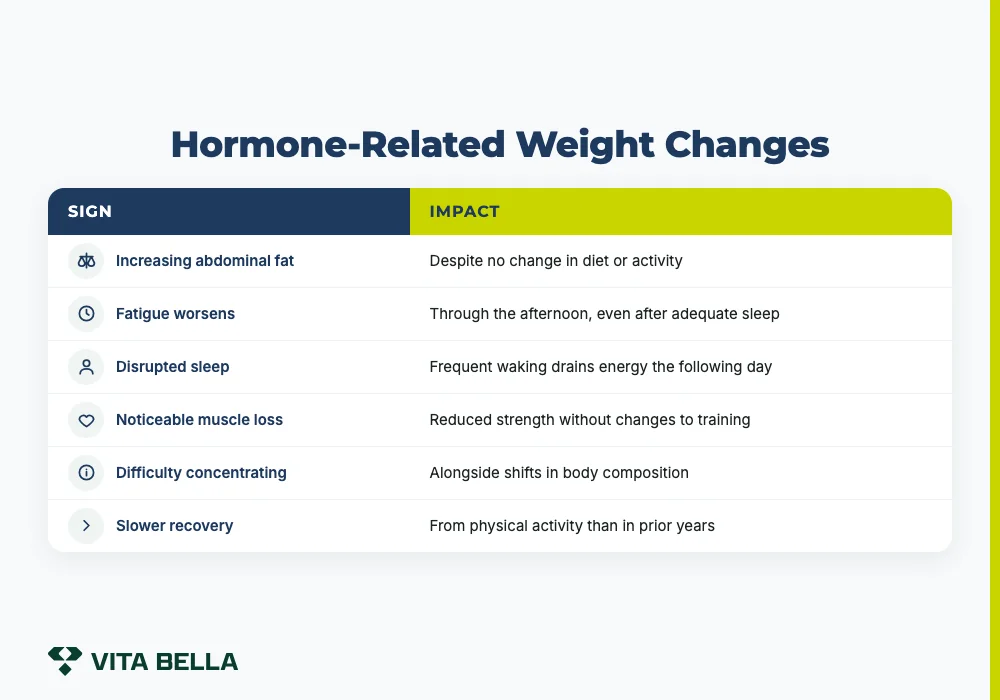
Signs that weight changes may be hormone-related:
- Increasing abdominal fat despite no change in diet or activity
- Fatigue that worsens through the afternoon, even after adequate sleep
- Disrupted sleep or frequent waking that drains energy the following day
- Noticeable muscle loss or reduced strength without changes to training
- Difficulty concentrating alongside shifts in body composition
- Mood changes, including irritability or low motivation, that coincide with weight changes
- Slower recovery from physical activity than in prior years
The perimenopause vs. post-menopause difference
Perimenopause involves fluctuating estrogen that can swing high before falling. Post-menopause means estrogen stays consistently low. These two phases produce different symptoms and different HRT responses, which is why a provider evaluation rather than a self-selected protocol is the right starting point.
The timing of therapy initiation relative to the last menstrual period affects metabolic outcomes. A licensed provider weighs that timing alongside your full lab picture and symptom history.
Does HRT actually help you lose weight?
Patients often ask "how does HRT help with weight loss", the answer lies in metabolic restoration rather than direct fat burning. HRT does not work as a standalone weight-loss intervention. What it does is restore the hormonal baseline that estrogen decline disrupted, which changes the metabolic conditions under which your body manages weight.
The science behind hormone replacement therapy and weight loss comes down to metabolic restoration rather than direct fat reduction. That means separating two questions: whether HRT directly causes fat loss, and whether it improves the conditions that make weight management possible. The answer to the first is largely no. The answer to the second is yes, in specific and documented ways.
Clinical evidence supports reduced visceral fat accumulation, better preservation of lean muscle mass, and improved insulin sensitivity with estrogen therapy (Cagnacci et al., 2019). Does HRT help weight loss for every woman? No. Response depends on the formulation, baseline labs, lifestyle factors, and how far into menopause a patient is when therapy begins.
Which HRT is best for weight loss during perimenopause?
No single formulation is best for everyone. When determining the best HRT for weight loss perimenopause brings specific hormonal challenges, since estrogen fluctuates rather than staying consistently low. Both delivery method and formulation type carry metabolic considerations, and a complete lab and symptom picture reviewed by a licensed provider is the right starting point.
Transdermal vs. oral estrogen: does the delivery method matter?
Transdermal estrogen bypasses first-pass liver metabolism, producing a different effect on triglycerides and clotting factors than oral forms (Cagnacci et al., 2019). For some patients, this is a clinically relevant distinction. A provider reviews your cardiovascular history and full lab panel before making any delivery-method recommendation, not a generalized checklist.
Estrogen-only vs. combined HRT
Women with an intact uterus require a progestogen alongside estrogen to protect the uterine lining. Combined HRT also produces different metabolic outcomes than estrogen alone. The type of progestogen matters for weight-related factors such as water retention and appetite signaling.
HRT delivery options and one metabolic consideration per type:
- Transdermal patch: bypasses liver metabolism; lower impact on triglycerides than oral forms
- Transdermal gel or spray: same hepatic bypass as the patch; flexible application
- Oral estrogen: convenient; increases hepatic triglyceride production more than transdermal forms
- Combined estrogen plus progestogen: required for intact uterus; progestogen type affects weight-related metabolic outcomes
A licensed provider determines the appropriate form and dose after reviewing labs.
How long does it take for HRT to help with weight?
Systemic estrogen effects begin within weeks of starting therapy. Meaningful body composition shifts take longer. Most women notice sleep quality and energy improve first, typically within four to eight weeks, because better sleep reduces cortisol-driven fat storage and supports a healthier metabolic environment.
Women tracking HRT weight loss before and after body composition assessments typically see the most notable changes between months three and six on a stable protocol. Individual timelines vary based on formulation, baseline labs, underlying conditions such as thyroid dysfunction, and lifestyle factors. The article on when "Normal" labs still leave you feeling suboptimal explains how reference ranges differ from optimal ranges, which matters when evaluating why two patients on identical HRT protocols respond differently.
What HRT cannot do on its own
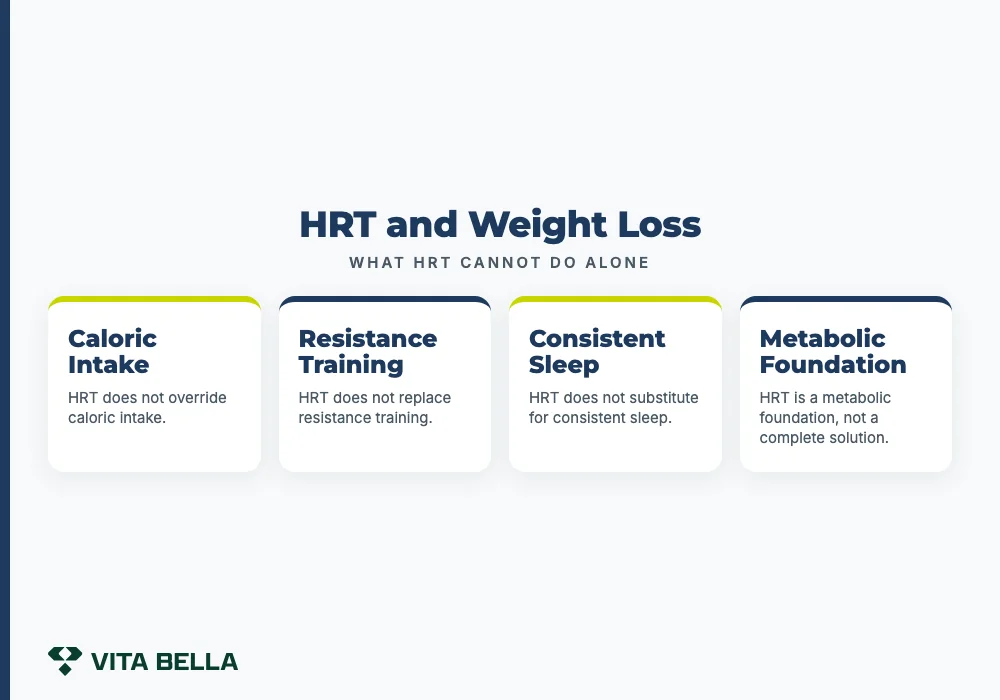
HRT restores a hormonal baseline. It does not override caloric intake, replace resistance training, or substitute for consistent sleep. Treating it as a complete solution rather than a metabolic foundation leads to unmet expectations.
A systematic review by Wei et al. (2022) in Biological Research for Nursing confirms that sustainable body composition changes require a combination of dietary pattern, physical activity, and metabolic support rather than any single intervention.
Lifestyle factors that support HRT outcomes:
- Adequate protein intake to preserve lean muscle during the hormonal transition
- Resistance training at least two to three times per week to slow muscle loss
- Consistent sleep timing and attention to any underlying sleep disruption
- Stress management, since elevated cortisol drives visceral fat accumulation
- Regular lab monitoring to adjust the HRT protocol as the hormonal environment changes
- Consistent provider check-ins to evaluate how body composition responds over time
When a provider-guided program adds more support
For patients where hormonal optimization alone is not sufficient, a coordinated program that addresses hormones, metabolism, and body composition together may be appropriate. This is a provider decision after lab review, not a patient-initiated add-on.
A comprehensive body composition program addresses both the hormonal foundation and a broader metabolic approach. For patients who qualify, a provider may also consider compounded tirzepatide prescribed by a licensed provider, prepared by a licensed compounding pharmacy pursuant to a valid prescription, as part of a coordinated GLP-1 management program.
What to expect from a provider evaluation
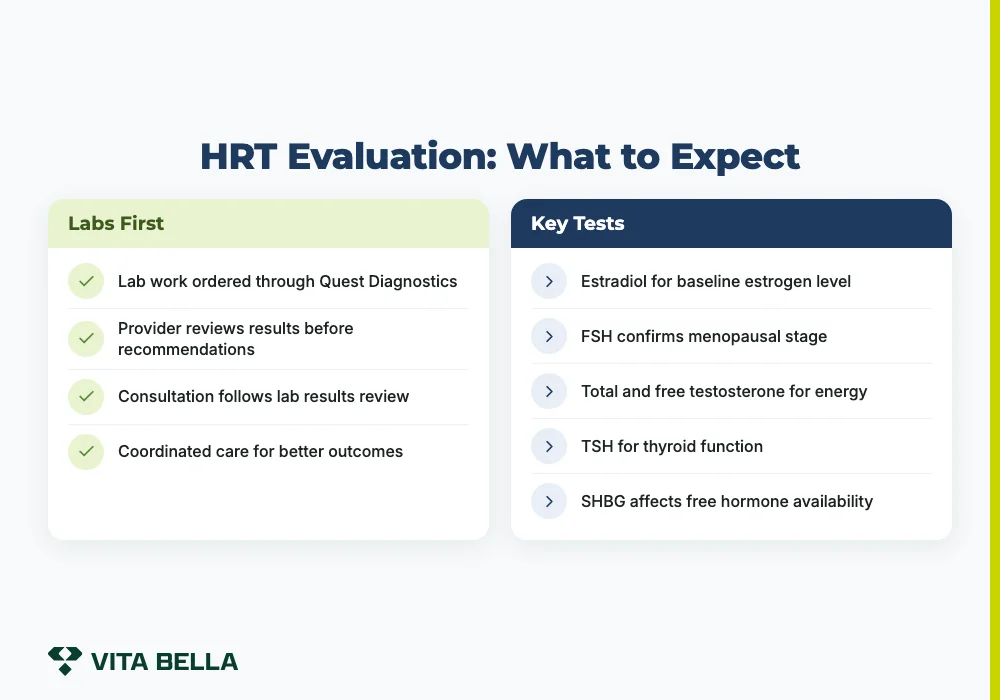
A provider evaluation for HRT begins with lab work, not a self-selected protocol. Labs are ordered through Quest Diagnostics and billed separately from the membership. The provider reviews your results before making any protocol recommendation.
Labs a provider typically orders before HRT:
- Estradiol, to establish baseline estrogen level
- FSH (follicle-stimulating hormone), to confirm menopausal stage
- Total and free testosterone, which affects energy, muscle, and libido
- TSH (thyroid function), which overlaps significantly with estrogen-related symptoms
- Complete metabolic panel, including glucose and electrolytes
- Lipid panel, for a cardiovascular baseline before estrogen therapy
- SHBG (sex hormone-binding globulin), which affects how much free hormone reaches tissue
Understanding how SHBG shapes hormone availability matters more than most patients expect. The article on sex hormone-binding globulin and why total testosterone tells only part of the story covers why providers look beyond total hormone numbers when interpreting results.
The consultation follows labs, not the other way around. A significant portion of the initial 45-minute visit covers reviewing your actual results. A systematic review by Walker et al. (2022) in Family Practice found that coordinated, provider-led care produces better outcomes for weight management than isolated self-directed interventions, which is the rationale behind a labs-first sequence.
Experiencing hormone-related weight changes? A provider evaluation starts with your labs. Take the 60-second quiz to see if you're a candidate.
Ready to find out if HRT is right for you?
If your weight changes started alongside other perimenopause or menopause symptoms, a provider evaluation is the right next step. Provider-supported programs at Vita Bella begin with a complete lab review. You pick your provider from a network of licensed clinicians across 47 states. Every member receives 1:1 provider care every quarter. Get Started and find out whether you're a candidate for HRT and metabolic support.
Frequently asked questions
Taking HRT helps with weight loss primarily by addressing the metabolic disruption that estrogen decline causes. Clinical evidence supports improved visceral fat distribution and insulin sensitivity with estrogen therapy, but results depend on formulation, timing, and an individual's complete lab picture.
The timing of HRT initiation relative to menopause affects metabolic outcomes. Women who begin therapy closer to perimenopause onset often see stronger metabolic responses than those who wait years after the final menstrual period. A provider evaluation accounts for this timing when recommending a protocol.
HRT does not make weight loss harder. Restoring estrogen often improves the metabolic conditions that estrogen decline disrupted, including insulin sensitivity and visceral fat distribution. Women who notice initial weight changes after starting HRT should discuss the specific formulation and lab results with their provider.
Yes, estrogen therapy can shift fat distribution toward subcutaneous storage at the hips and thighs and away from visceral accumulation in the abdomen. This change in body composition can occur even when the scale does not move significantly. The degree of change depends on the protocol, baseline labs, and individual response.
Yes, a provider may recommend both as part of a coordinated metabolic plan. Hormonal support and a structured body composition approach address different mechanisms and can work together when a provider determines both are appropriate based on your labs.
Yes. Labs are required before a provider recommends any HRT protocol. They establish your baseline estrogen, thyroid, and metabolic markers, which determine whether HRT is appropriate and which formulation fits your situation. Labs are ordered through Quest Diagnostics and billed separately.
HRT restores a hormonal baseline that estrogen decline disrupted; it does not directly trigger fat loss. Weight-loss medications such as compounded tirzepatide address appetite regulation and metabolic signaling through a different mechanism. A provider determines which approach, or which combination, fits your lab results and health goals.
Sources
- Cagnacci A et al. (2019). Recommendations on menopausal hormone replacement therapy. Minerva Ginecologica. PubMed
- Wei X et al. (2022). Intermittent Energy Restriction for Weight Loss: A Systematic Review of Cardiometabolic, Inflammatory and Appetite Outcomes. Biological Research for Nursing. PubMed
- Walker R et al. (2022). Shared medical appointments for weight loss: a systematic review. Family Practice. PubMed