

What Nandrolone Is and Why It Attracts Interest for Recovery
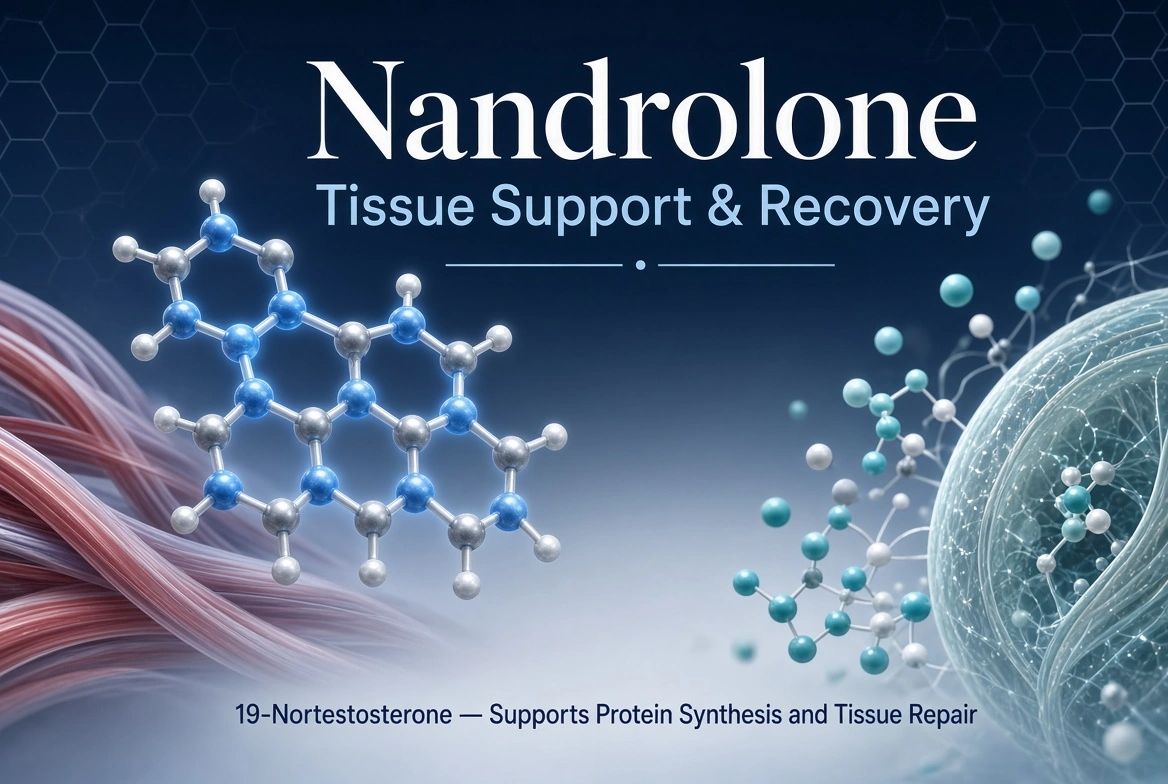
Nandrolone is a synthetic anabolic-androgenic steroid structurally related to testosterone. It has a higher ratio of anabolic (tissue-building) to androgenic activity than testosterone itself. Clinicians have long used it in limited settings for muscle wasting, certain bone conditions, and, more recently, as an adjunct when connective-tissue recovery is slow.
Interest in nandrolone for injury recovery centers on its effects on lean tissue, collagen-related metabolism, and the musculotendinous unit. Laboratory and animal models have shown that, under controlled loading, nandrolone can influence matrix remodeling in engineered tendon constructs and may help limit fatty infiltration of muscle after tendon detachment. Human evidence remains more limited and is still evolving.
Tissues That May Benefit
Tendons are a primary focus. Tendon tissue has relatively poor blood supply and heals slowly. In-vitro work with human bioartificial tendons found that nandrolone combined with mechanical load improved remodeling, cytoskeletal organization, and biomechanical properties compared with either stimulus alone. Animal studies of rotator-cuff models have examined whether nandrolone reduces muscle atrophy and fatty change after tendon release; results have been mixed but suggest possible protective effects on the muscle side of the unit.
Muscle itself responds to nandrolone with increases in lean mass in clinical trials. Bone has also been studied: older trials in postmenopausal women and some work on delayed fracture union reported positive changes in bone mineral content or callus formation when nandrolone was given under supervision. Ligaments and joint capsules share collagen-rich structure with tendons; any benefit is inferred from the same collagen-metabolism pathways rather than large dedicated human trials.
Why Nandrolone Is Used Together with Testosterone
Nandrolone strongly suppresses the body’s own testosterone production. When used by itself, circulating testosterone can fall while nandrolone occupies androgen receptors. The result is often reduced libido, erectile difficulty, low mood, and other signs of androgen deficiency.
Adding exogenous testosterone restores the androgenic support that nandrolone alone does not fully provide. The combination keeps the anabolic signal from nandrolone while maintaining the androgenic functions (sexual function, mood, secondary sex characteristics) that depend on adequate testosterone and its metabolites. Clinicians who use this approach typically keep testosterone at least equal to, and often higher than, the nandrolone dose and monitor labs carefully.
Short-Term Use Only and the 3-Month Tissue-Repair Window
Because nandrolone is being considered here strictly for injury and recovery, duration should remain limited—usually weeks to a few months—rather than continuous long-term therapy. Prolonged use increases the likelihood of suppression, lipid changes, and other steroid-related effects.
Soft-tissue healing follows three overlapping phases. The inflammatory phase occupies roughly the first several days: cleanup of damaged tissue and initiation of repair. The proliferative (repair) phase lasts from about one to six weeks: new collagen is laid down, but the tissue is still weak and disorganized. The remodeling (maturation) phase extends from roughly six weeks out to three months or longer for tendons and ligaments: collagen fibers realign under progressive load and tensile strength gradually returns.
A typical three-month recovery window therefore covers the bulk of active repair and the early part of remodeling. Any pharmacologic support is timed to overlap with these biological windows and is stopped once the tissue has progressed far enough that further gains depend mainly on progressive loading and rehabilitation.
Clinical Context and Monitoring
Nandrolone for injury recovery remains an off-label or specialized approach and requires medical supervision, baseline and follow-up laboratory work, and is recommended to integrate with physical therapy. When hormone status or recovery support needs broader evaluation, clinicians experienced in these compounds can be found through resources such as Vita Bella.
For individuals already managing hormone levels or exploring peptide options alongside soft-tissue recovery, the same clinical teams at Vita Bella can help coordinate laboratory monitoring and individualized plans.
References
1. Triantafillopoulos IK, et al. Nandrolone decanoate and load increase remodeling and strength in human supraspinatus bioartificial tendons. Am J Sports Med. 2004;32(4):934-943. doi:10.1177/0363546503262202
2. Gerber C, et al. Anabolic steroids reduce muscle damage caused by rotator cuff tendon release in an experimental model. J Bone Joint Surg Am. 2011;93(23):2189-2195.
3. Pan MM, Kovac JR. Beyond testosterone cypionate: evidence behind the use of nandrolone in male health. Transl Androl Urol. 2016;5(2):213-219. doi:10.21037/tau.2016.03.03
4. Reviews of anabolic steroid effects on tendon structure and collagen metabolism; clinical observations on nandrolone-testosterone co-administration to preserve androgenic function.