Testosterone cream for women is a compounded, off-label treatment applied daily to thin-skin areas such as the inner wrist or forearm. No testosterone product is currently authorized specifically for women in the US, so providers prescribe customized compounded formulas. The cream absorbs through the skin to support hormonal balance in perimenopausal and postmenopausal women, and a licensed provider evaluates labs and health history before prescribing. Vita Bella's women's hormone care options include provider-led programs for perimenopausal and menopausal women.
What does testosterone do in a woman's body?
Testosterone is not exclusively a male hormone. Women produce it in the ovaries and adrenal glands throughout reproductive life and beyond. It supports energy metabolism, sexual desire, mood regulation, muscle maintenance, and bone density.
The hormone's role in female health extends beyond libido. Research suggests testosterone contributes to cognitive function, body composition, and cardiovascular health, though the precise mechanisms in women remain under active investigation. Physiological testosterone levels are part of a broader hormonal system, not an isolated factor.
Why levels change during perimenopause and menopause
Testosterone levels begin declining in a woman's late 30s. This often happens before estrogen drops, which means perimenopausal women ages 35–45 may experience testosterone-related symptoms while still cycling regularly. That window is frequently overlooked in mainstream clinical discussions.
By menopause, free testosterone levels may have dropped considerably from their peak. The decline is gradual but cumulative. For women who already had borderline levels in their mid-30s, the perimenopausal transition can amplify symptoms that are easy to attribute to stress or aging alone. Recognizing the signs of declining testosterone in women during this period is a practical first step toward clinical evaluation.
Does testosterone cream work for women?
Testosterone cream for women has the strongest clinical evidence for hypoactive sexual desire disorder (HSDD) in postmenopausal women. A 2019 global consensus position statement by Davis et al. concluded that testosterone therapy improves sexual function in this population and that use at physiological doses carries an acceptable safety profile. Beyond HSDD, the evidence base is growing but less definitive.
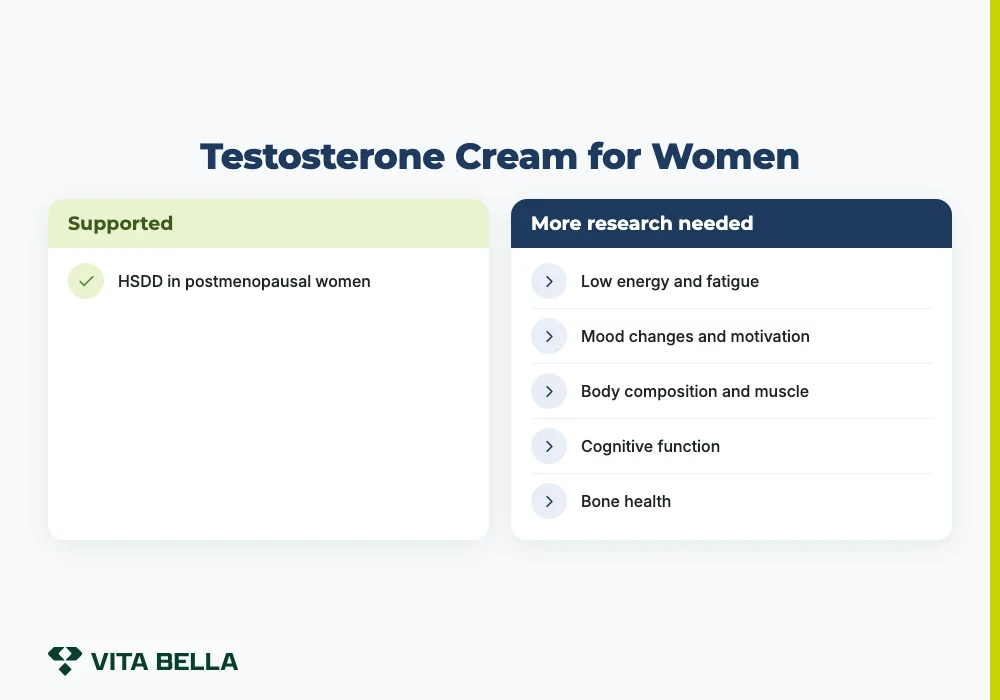
What testosterone therapy is and is not supported to treat in women:
- Hypoactive sexual desire disorder (HSDD) in postmenopausal women: supported by clinical evidence, including the 2019 international consensus statement by Davis et al.
- Low energy and fatigue: some women report improvement; clinical trial data are promising but not yet conclusive.
- Mood changes and reduced motivation: under active investigation; observational data suggest a relationship, but controlled trials remain limited.
- Body composition and muscle maintenance: early evidence is positive; more research is needed before firm conclusions can be drawn.
- Cognitive function: the relationship between testosterone and cognition in women is an active area of inquiry with no consensus yet.
- Bone health: testosterone contributes to bone maintenance, but it is not established as a primary treatment for bone loss in women.
What the clinical evidence shows
The 2019 global consensus position statement by Davis et al. is the foundation for prescribing testosterone to women in clinical practice. It synthesized data from multiple randomized controlled trials and concluded that transdermal testosterone at physiological doses effectively treats HSDD in postmenopausal women. Unlike testosterone products formulated for men, testosterone for women cream is compounded at much lower concentrations to stay within female physiological ranges.
The Endocrine Society's 2018 testosterone therapy guidelines by Bhasin et al. address broader protocol considerations; although that guidance focuses on men, its framework for assessing therapy response and monitoring informs how providers approach women's protocols as well.
"Off-label" means the treatment is used for a purpose or in a population not covered by the original FDA approval. "Compounded testosterone cream" means a licensed compounding pharmacy formulates the product to a licensed provider's specifications. No commercial testosterone product is currently cleared for use in women in the US, so compounding is the standard pathway for access. A licensed provider determines the dose after reviewing labs and clinical history.
Symptoms that may respond to testosterone therapy
Not every symptom associated with low testosterone responds to testosterone replacement. A provider evaluates the full hormone panel and clinical context before attributing symptoms to testosterone specifically. That said, a range of signals may warrant a conversation about evaluation.
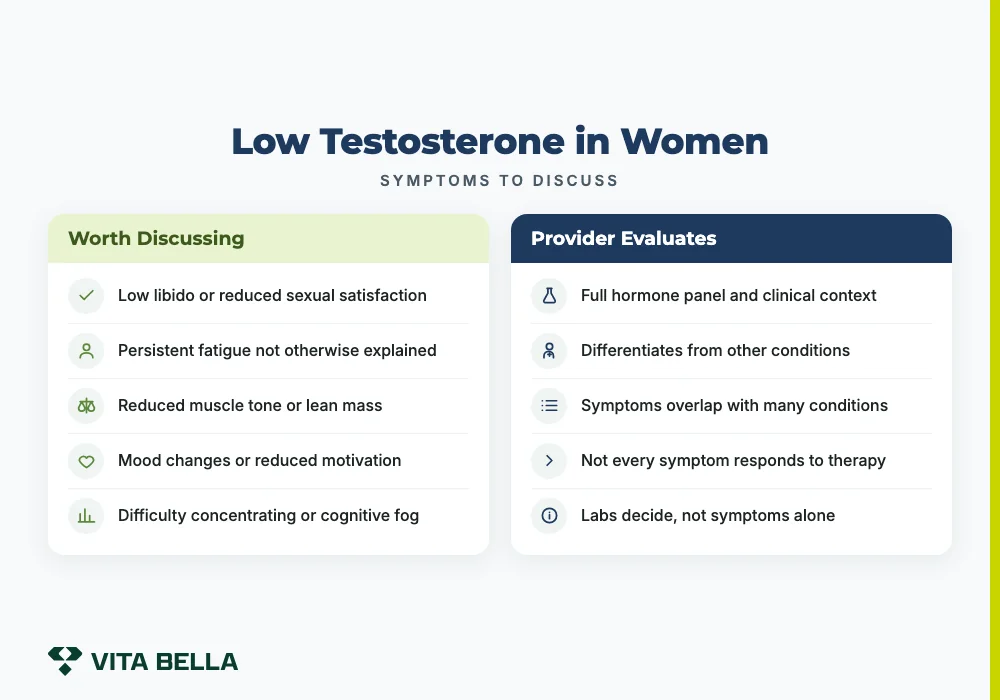
Symptoms that may indicate low testosterone in women, worth discussing with a provider:
- Low libido or reduced sexual satisfaction that persists despite adequate sleep and stress management
- Persistent fatigue that is not explained by thyroid dysfunction, anemia, or sleep quality issues
- Reduced muscle tone or difficulty maintaining lean mass despite consistent training
- Mood changes, including reduced motivation or a flattened emotional baseline
- Difficulty concentrating or a sense of cognitive fog that feels hormone-related
- Body composition changes, such as increasing central fat with simultaneous muscle loss
- Reduced bone density noted on screening, in combination with other hormonal changes
These symptoms overlap with many conditions, including thyroid imbalance, adrenal dysfunction, and mood disorders. A licensed provider differentiates through labs. For a fuller picture of what to look for, see what low testosterone looks like in women.
Who is a candidate, and who should wait?
A licensed provider determines candidacy after a full clinical evaluation that includes lab work and a health history review. Testosterone therapy is not appropriate for every woman with these symptoms, and certain clinical situations require a different approach.
What a provider typically evaluates before prescribing testosterone cream for women:
- Hormone panel: total and free testosterone, estradiol, SHBG, and other relevant markers ordered through Quest Diagnostics and reviewed before the first visit
- Symptom history: onset, duration, and whether symptoms align with hormonal patterns versus other explanations
- Thyroid and adrenal function: ruling out conditions that mimic low testosterone
- Cardiovascular and metabolic markers: reviewed as part of a baseline safety assessment
- Existing conditions and medications: some diagnoses and drug interactions affect whether testosterone therapy is appropriate
- Pregnancy status: testosterone therapy is not appropriate for women who are pregnant or planning pregnancy
A licensed provider determines dosing and protocol after reviewing your results.
If the factors described here resonate, a licensed provider can review your labs and clinical picture. Get Started
How do you apply testosterone cream?
Testosterone cream for women is applied topically once daily to a thin-skin area, following a provider's instructions for amount and site rotation. The practical details matter. Consistent technique affects both absorption reliability and safety for others in your household.
Wash and dry the application site before applying. Apply the prescribed amount using a measured applicator or pump dispenser, depending on the formulation. Allow the site to dry fully before dressing, typically three to five minutes. Wash hands thoroughly after application. Store the cream at room temperature, away from heat and direct sunlight.
Where do you apply testosterone cream?
The cream is applied to thin-skin, high-absorption areas. The inner wrist, inner forearm, and inner thigh are the most commonly used sites. Rotate among sites as directed by your provider to avoid localized buildup and to maintain consistent absorption.
Avoid application to sun-exposed or broken skin. Avoid areas likely to come into contact with partners, children, or pets before the cream has dried fully, since testosterone can transfer via skin contact. Your provider's specific instructions take precedence, as formulation concentration and vehicle composition affect both site selection and drying time.
When will you notice results?
Most providers track progress over an 8–12 week window. Response is gradual and varies by individual.
A general milestone framework:
- Weeks 2–4: Some women notice early shifts in energy or mood; most changes in this window are subtle.
- Weeks 4–8: Libido improvements, if they occur, often begin to register here. Fatigue and mood may show more consistent change.
- Weeks 8–12: This is the standard evaluation window for a first protocol assessment. Follow-up labs are drawn and compared to baseline.
Consistent daily application is the most important factor for a reliable response. Protocol adjustments are based on labs and your symptom report.
Testosterone cream vs. injections: what providers consider
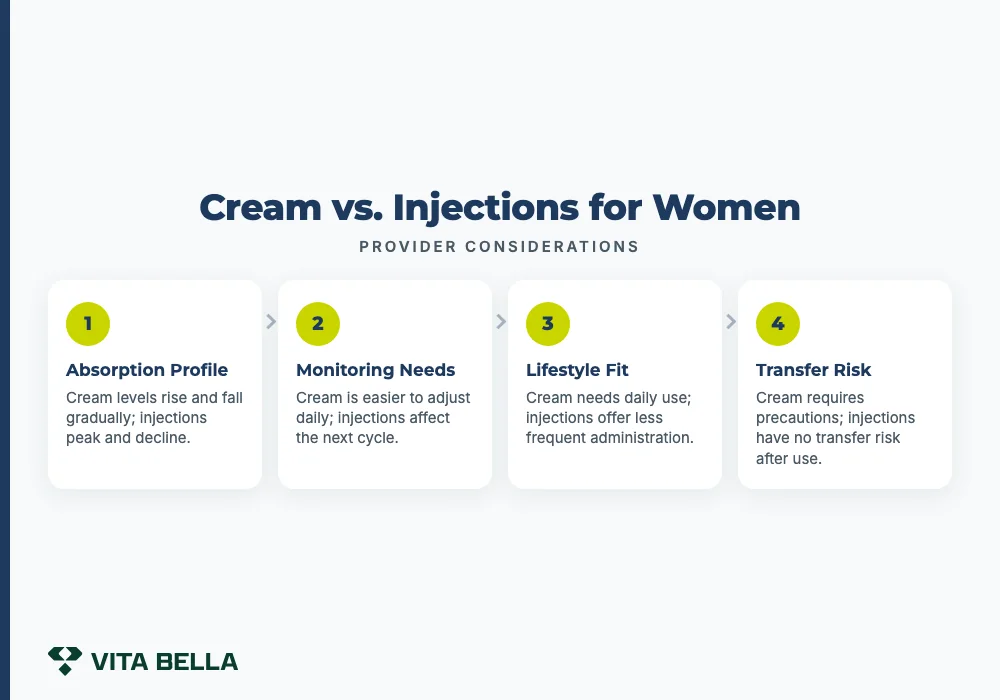
When comparing testosterone cream vs. injection for women, providers weigh several clinical factors. Neither delivery method is universally preferred; the right choice depends on absorption profile, monitoring needs, and lifestyle fit.
Testosterone cream:
- Applied to skin once daily; absorbed transdermally over hours
- Levels rise and fall gradually within a day, which mirrors a more physiological pattern
- Easier to adjust if the starting amount needs refinement; changes take effect within days
- Requires consistent daily application for stable levels
- Partner and child transfer precautions apply until fully absorbed
Testosterone injections:
- Administered at set intervals by or under the supervision of a provider
- Levels peak shortly after injection and decline until the next administration
- Less daily maintenance; some women prefer the lower administration frequency
- Adjustments affect the next cycle rather than the next day
- No transfer risk after administration
For a detailed look at all hormone delivery methods for women, including gels, patches, and subcutaneous options, that overview covers each format in depth. Sex hormone-binding globulin (SHBG) levels also affect how much free testosterone is available; understanding how SHBG interacts with testosterone levels helps explain why two women with similar total testosterone readings can have very different clinical pictures.
Possible side effects and why provider monitoring matters
Possible side effects are uncommon at physiological doses and are typically mild and reversible under provider oversight. Using the smallest effective amount, rotating application sites, and attending quarterly provider check-ins all contribute to a well-managed protocol.
Side effects that may occur:
- Acne or oily skin may appear, particularly in the first weeks of treatment
- Mild, temporary changes in hair texture may occur in some women
- Mood shifts, including mild irritability, may be reported early in the protocol
- Clitoral sensitivity changes have been noted in some patients
These effects are not inevitable. They are more likely at amounts above physiological replacement ranges. If any side effect is bothersome, a provider adjusts the protocol; most resolve with an adjustment or site change. Quarterly provider check-ins are built into the protocol specifically for this purpose.
Getting a prescription through telehealth
The telehealth process for testosterone cream for women can feel opaque. Here is how it works at Vita Bella, from labs to first shipment.
For a broader overview of testosterone therapy for women, including candidacy criteria and the range of delivery methods, that resource covers the full picture.
The Vita Bella telehealth process:
- Labs first: Labs are ordered through Quest Diagnostics and reviewed before your provider visit; they are billed separately from the membership fee.
- Initial consultation: A 45-minute provider consultation covers your lab results, symptom history, and health goals.
- Protocol prescribed: The provider determines whether testosterone cream is appropriate and writes a protocol tailored to your clinical picture.
- Compounded cream shipped: Your prescription is filled by an FDA-inspected, state-licensed US compounding pharmacy and shipped with discreet packaging.
- Quarterly provider check-ins: Follow-up visits allow the provider to review labs, adjust the protocol, and monitor for side effects.
You choose your provider from licensed clinicians across 47 states. No AI in clinical care. Every check-in is a 1:1 provider conversation.
Ready to talk to a provider about testosterone cream?
If you are evaluating whether testosterone cream fits your situation, the right next step is a conversation with a licensed provider who can review your labs, symptoms, and health history. At Vita Bella Health, provider-supported programs include initial labs reviewed before your visit, a 45-minute provider consultation, and quarterly provider check-ins to monitor and adjust your protocol. Discreet shipping from FDA-inspected, state-licensed US pharmacies is included.
Explore your options at Vita Bella's hormone therapy program, or take the first step now.
Frequently asked questions
Testosterone therapy has the strongest clinical evidence for hypoactive sexual desire disorder (HSDD) in postmenopausal women, based on the 2019 global consensus position statement by Davis et al. A licensed provider evaluates whether this indication applies to your clinical picture before prescribing. Response varies by individual, and labs are reviewed before treatment begins.
Some women report improvements in energy and mood during testosterone therapy, though these areas have less robust clinical evidence than HSDD. A provider weighs your full hormone panel and symptom history before determining whether testosterone may be appropriate. These benefits, when they occur, typically emerge over the 4–12 week window after starting treatment.
Most providers track results over an 8–12 week window; some women notice early changes around weeks 4–6. Consistent daily application matters more than any single factor for a reliable response. A licensed provider adjusts the protocol based on follow-up labs and your reported response over time.
At physiological doses and under provider monitoring, testosterone therapy is generally considered safe per the 2019 global consensus position statement by Davis et al. Possible side effects may occur and are typically mild and reversible; regular labs and quarterly provider check-ins are the standard safety mechanism. A licensed provider reviews your health history and labs before prescribing.
Cream is applied to the skin once daily and absorbed transdermally, with levels rising and falling gradually over the day. Injections are administered at set intervals with a different absorption and adjustment curve. A licensed provider recommends a delivery method based on labs, lifestyle, and monitoring needs.
Sources
- Davis SR et al. (2019). Global Consensus Position Statement on the Use of Testosterone Therapy for Women. Journal of Clinical Endocrinology and Metabolism, 104(10): 4660–4666. PubMed
- Bhasin S et al. (2018). Testosterone Therapy in Men With Hypogonadism: An Endocrine Society Clinical Practice Guideline. Journal of Clinical Endocrinology and Metabolism. PubMed