



Microdosing GLP-1 medications means taking smaller doses of drugs such as semaglutide or tirzepatide. Many people use this method seeking better appetite control with fewer side effects. Others use lower doses after reaching their weight goals. Scientists are still studying the effects of this practice.
At Vita Bella, we understand that GLP-1 treatment is not the same for everyone. Our team evaluates your medical background, current medications, weight-management goals, and overall treatment progress. We then use this information to help guide dosing decisions over time. If your needs change, we can adjust your approach to support safe, effective, and individualized care throughout your treatment journey.
Why Is Microdosing GLP-1 Medication Becoming a Popular Weight Management Trend?
Interest in microdosing GLP-1 medications is growing. Many people want a slower path to weight loss or better control of hunger. In addition, avoiding stomach side effects is a priority for some patients. Some people use lower doses as maintenance following completion of their weight loss goals. Online discussions have increased interest in this approach and more patients are now asking about lower-dose treatment options.
What Does Current Research Say About Microdosing GLP-1 Medications?
Current research on microdosing GLP-1 medications is still limited. These medicines help reduce hunger and can help people eat less but more importantly, can help with ‘food noise’ or the distraction that some individuals face related to food. Low doses still may support weight loss in some patients and many want a more gradual treatment option. Experts are still working on establishing clear microdosing guidelines. Researchers need more studies to better understand long-term effects and optimal dosing regimens.
Appetite Regulation and Lower-Dose GLP-1 Therapy
GLP-1 medications help control hunger and food intake. Many people feel full sooner during meals. Some patients also notice fewer food cravings during the day known as food noise. As a result, appetite control may improve over time. Lower-dose approaches aim to use the same mechanisms while reducing treatment burden. However, responses can differ. Some people notice clear benefits, while others may need standard dosing for meaningful results.
Weight Maintenance After Initial Weight Loss
Weight maintenance remains a challenge for many people. Hunger often increases after weight loss. This can make it harder to keep weight off over time. Some patients are exploring lower-dose GLP-1 treatment after reaching their target weight. The goal is to support appetite control during maintenance. However, healthcare providers should review each case carefully and determine whether this approach matches the patient’s needs.
Research supports the role of GLP-1 treatment in long-term weight management. In the JAMA [2], participants first lost weight during a semaglutide treatment period. Those who continued treatment lost additional weight over the following months. Participants who switched to placebo regained weight. These findings suggest that continued treatment may help maintain weight loss and support long-term results in some patients.
What Are the Potential Benefits and Limitations of Microdosing GLP-1 Medications?
People do not respond to GLP-1 treatment in the same way. A lower dose may work well for one person. Another person may need a higher dose. Body weight, health history, and treatment goals can affect results. Side effects can also differ. For this reason, healthcare providers should check progress frequently and make adjustments as needed.
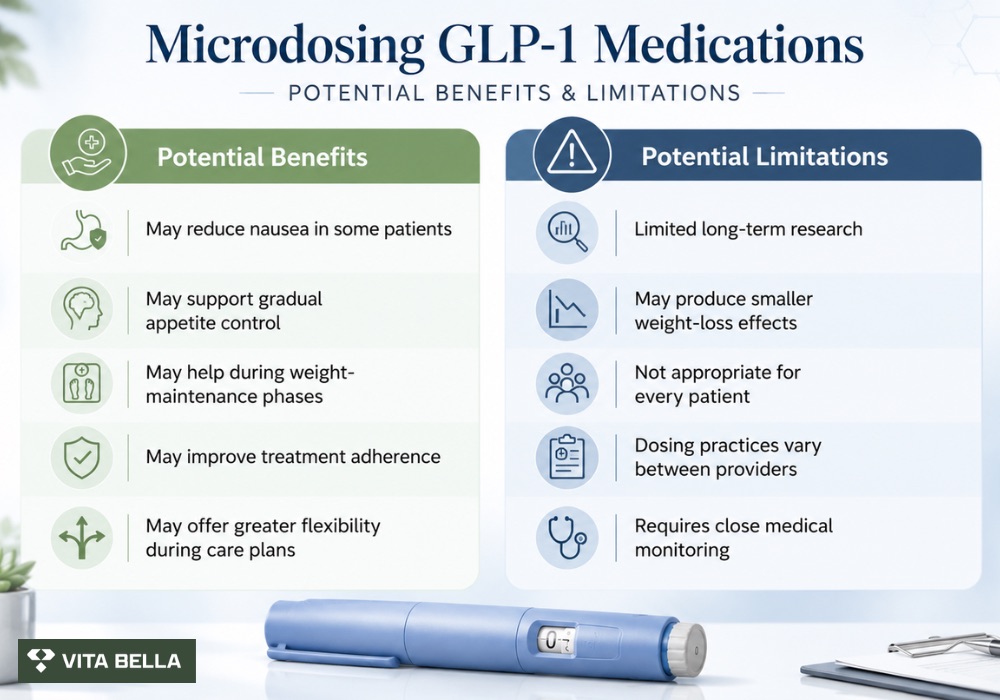
Research shows both benefits and limits. In Diabetes, Obesity & Metabolism [3], semaglutide was found to help people lose a significant amount of weight. The review also found that stomach-related side effects were the most common adverse events. Most were mild to moderate and temporary. These findings show why careful dose selection and regular follow-up remain important.
Who May Consider a Lower-Dose GLP-1 Approach Under Medical Supervision?
A lower-dose GLP-1 approach may help some people. However, it is not the right choice for everyone. Treatment goals often differ from person to person. While some individuals want a slower treatment plan, others want help with side effects. In addition, dose changes may become necessary as treatment progresses. Therefore, a healthcare provider should guide all treatment decisions and review results over time.
Some patients may discuss a lower-dose GLP-1 approach with their healthcare provider. For example, this may include:
People who are working to maintain weight loss
Patients who are sensitive to stomach side effects
Adults seeking gradual hunger control
Individuals returning to treatment after a break
Patients following an individualized weight-management plan
Adults who need dose changes based on treatment results
However, these examples do not mean a person qualifies for lower-dose treatment. Each case is different. Health history, treatment goals, and past results can all affect the decision. In addition, regular follow-up visits help track progress. Providers can make safe dose recommendations.
Research supports the use of GLP-1 medications for weight management. In a study published in the National Library of Medicine [4], semaglutide resulted in greater weight loss than liraglutide over 68 weeks but it also reported stomach side effects in many participants. This lead to some participants to stop treatment before the study ended. These findings show why regular follow-up and careful dose decisions remain important during treatment.
At Vita Bella, we create GLP-1 treatment plans based on your individual needs. We review your health history, medications, weight-loss goals, and treatment response. In addition, we monitor your progress and adjust your plan when needed. Whether you need a standard or lower-dose approach, we can help guide your care. If you have questions about GLP-1 therapy, schedule a consultation with us to discuss your options and develop a treatment plan that aligns with your goals.
Frequently asked questions
Results can vary from person to person. Some people notice changes in hunger levels within the first few weeks. For others, noticeable effects take longer to appear. Meanwhile, weight-loss results often develop gradually. Factors such as dose level, lifestyle habits, and treatment consistency can influence how quickly results appear.
Diet and physical activity remain important parts of weight management. A lower-dose GLP-1 approach does not replace healthy lifestyle habits. Instead, it may work alongside them. Balanced nutrition, regular movement, and consistent sleep habits can help support treatment goals and improve long-term weight-management outcomes.
Treatment needs can change over time. If hunger increases or progress slows, a healthcare provider may review your treatment plan. In some cases, a dose adjustment may help. However, providers also consider lifestyle factors, health changes, and treatment goals before making changes. Regular follow-up visits help guide these decisions safely.
Changing a GLP-1 dose without medical advice may increase the risk of side effects or reduce treatment effectiveness. In addition, some people may overlook important health factors that affect dosing decisions. A healthcare provider can review your medical history, medications, and treatment response before recommending any dose changes.