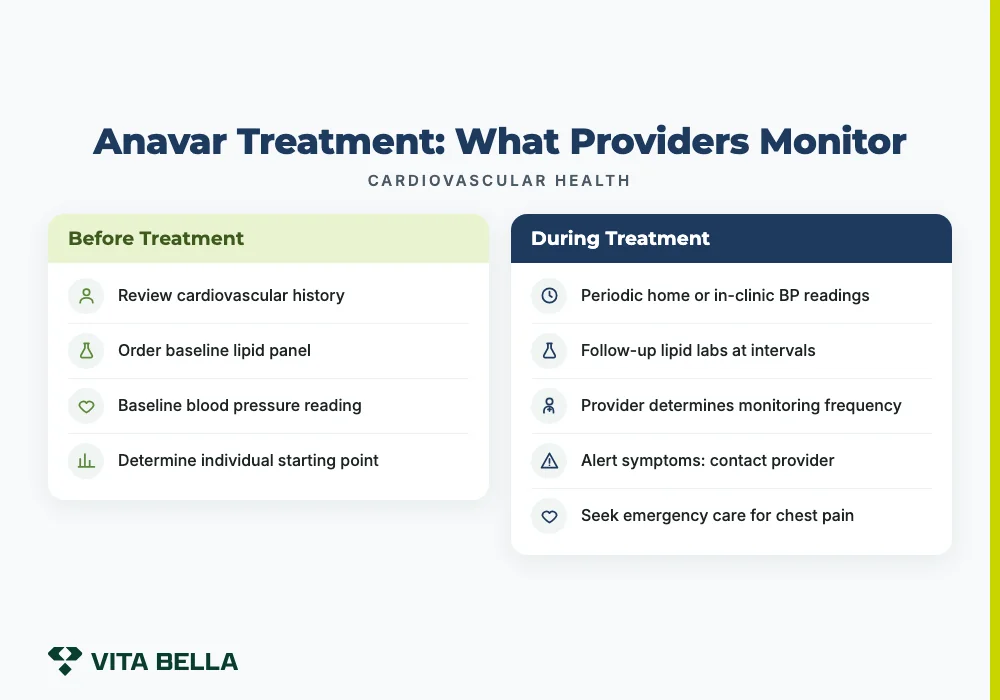
Does anavar raise blood pressure? Blood pressure changes are possible with oxandrolone use, although the mechanism and size of the effect are not well established for supervised clinical use. Most available evidence comes from studies of people using anabolic steroids in general without medical supervision at supraphysiological doses, a different context than supervised short-term clinical treatment. Providers overseeing supervised oxandrolone treatment may review lipid labs and ask for home or in-clinic blood pressure readings as part of monitoring.
How Anavar Affects Blood Pressure
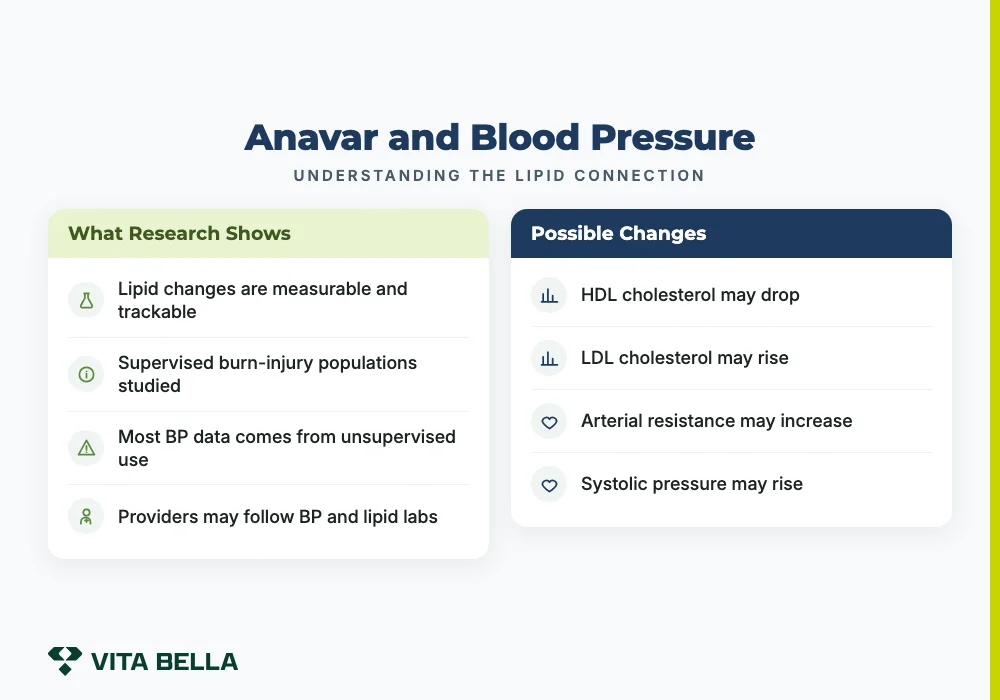
The anavar blood pressure connection is not fully mapped in supervised clinical research, so it helps to separate lipid effects from blood pressure itself. Oxandrolone's androgenic activity can lower HDL cholesterol, and LDL may rise.
That lipid shift is a long-term cardiovascular consideration in its own right, which is one reason providers may review lipid labs alongside blood pressure readings. Burn-care meta-analyses by Ring et al. (2020) in the Journal of Burn Care and Research and Lou et al. (2025) in the World Journal of Emergency Surgery reviewed oxandrolone under clinical supervision, but they focused on recovery outcomes and liver safety, not blood pressure or lipid changes.
How lipid changes fit in
Former oxandrolone labeling noted that oral androgens can lower HDL and raise LDL. The result can be a less favorable lipid ratio, a long-term cardiovascular risk factor that providers may follow with repeat lipid labs.
A direct causal link between these lipid changes and higher blood pressure has not been established, and the size of the shift during supervised short-term use varies by individual. Research involving populations who used anabolic steroids outside of medical supervision reports higher blood pressure among users, but those studies did not isolate anavar and cannot be applied directly to supervised clinical use.
Does Anavar affect systolic or diastolic pressure more?
In studies of anabolic steroid users, systolic pressure appears to be affected more than diastolic pressure, although the reason is not established. A study presented at the Endocrine Society's ENDO 2016 meeting by Rasmussen et al. associated anabolic steroid abuse with higher systolic blood pressure and more frequent nighttime systolic hypertension in men who used AAS without medical supervision, while diastolic pressure was similar across groups.
How that pattern applies to supervised, short-term clinical use is not firmly established in the literature. A licensed provider may ask for home or in-clinic readings to follow both systolic and diastolic pressure during treatment.
Clinical Use vs. Unsupervised Use: Why the Context Matters
Most published data on whether anavar causes high blood pressure come from unsupervised anabolic steroid misuse rather than clinical treatment. That context matters. Clinics and hospitals have used oxandrolone in burn recovery, as documented by burn-care meta-analyses from Ring et al. (2020) and Lou et al. (2025). These are controlled settings with provider oversight throughout.
Oxandrolone carries no current FDA approval; the approval was withdrawn in June 2023. Today it is available only through compounding by licensed-provider prescription. Vita Bella pairs oxandrolone with testosterone, and testosterone carries its own cardiovascular considerations worth understanding before starting any protocol. For background on testosterone's effect on blood pressure and the reasoning behind combining both compounds, the article on oxandrolone and testosterone therapy explains the protocol rationale in full.
Readers interested in supervised short-term oxandrolone can learn about provider-supervised recovery at Vita Bella and member wholesale pricing on medications.
Oxandrolone for Injury and Recovery at Vita Bella
Vita Bella offers short-term, licensed-provider-supervised oxandrolone treatment within its injury and recovery care. Providers pair oxandrolone with testosterone, keep oxandrolone use to no longer than eight weeks, and may review lipid labs and ask for home or in-clinic blood pressure readings as part of monitoring. Members receive wholesale pricing on medications, billed separately from the membership fee. For details on what membership includes, visit the Membership page.
Frequently asked questions
Blood pressure changes may occur with oxandrolone use, although the size of the effect is not well established for supervised clinical use, and oxandrolone can also lower HDL and raise LDL as a separate cardiovascular consideration. Most research showing significant increases involved people using anabolic steroids in general without medical supervision at supraphysiological doses. Under provider supervision, blood pressure is a known cardiovascular variable that licensed providers may follow with home or in-clinic readings during short-term treatment.
Available data from anabolic steroid studies suggest systolic pressure may rise more than diastolic, although the reason is not established. These findings come from unsupervised-use populations, and how the pattern applies to supervised short-term clinical use is unclear. A licensed provider may ask for home or in-clinic readings to follow both as part of ongoing oversight.
The timeline for cardiovascular changes with oxandrolone is not well defined in supervised clinical populations and varies by individual baseline health, treatment duration, and concurrent medications. Providers may follow this with periodic labs and home or in-clinic blood pressure readings rather than expecting a fixed timeline. Any new cardiovascular symptoms should be reported to the provider promptly.
Eligibility depends on a full clinical evaluation: cardiovascular history, current medications, and lab results reviewed by a licensed provider before any prescription is written. No blanket answer applies; the decision is individual. A provider weighs all relevant factors before determining whether short-term supervised use is appropriate.
Possible side effects include lipid changes (HDL reduction and LDL increase), blood pressure changes, liver enzyme changes, and effects on hormone levels, particularly in combination with testosterone. These effects may occur, and providers can follow them with labs and home or in-clinic blood pressure readings during treatment. Alert symptoms, including chest pain, shortness of breath, and unusual swelling, warrant immediate provider contact or emergency care.
Sources
- Lou J et al. (2025). Oxandrolone for burn patients: a systematic review and updated meta-analysis of randomized controlled trials from 2005 to 2025. World Journal of Emergency Surgery. PubMed
- Ring J et al. (2020). Oxandrolone in the Treatment of Burn Injuries: A Systematic Review and Meta-analysis. Journal of Burn Care and Research. PubMed
- Riebe D et al. (1992). The blood pressure response to exercise in anabolic steroid users. Medicine and Science in Sports and Exercise. PubMed
- Endocrine Society (2016). Anabolic steroid abuse is associated with increased systolic hypertension risk (press release on an ENDO 2016 poster by Rasmussen JB et al.). endocrine.org