Hormone replacement therapy (HRT) covers any protocol that restores deficient hormones, including estrogen, progesterone, and testosterone. Testosterone replacement therapy (TRT) is a specific subset that targets testosterone alone. Both therapies correct hormone imbalances confirmed by bloodwork, but they differ in scope, the hormones involved, and the populations they treat. A licensed provider and your lab results determine which hrt vs trt path applies to you.
What Is HRT?
Hormone replacement therapy describes any clinical protocol that replenishes hormones the body no longer produces at adequate levels. Clinicians use it for conditions ranging from menopausal estrogen decline to multi-hormone deficiency in aging adults of both sexes. The specific hormone mix in any protocol depends on what labs confirm is deficient.
HRT types include:
Estrogen-only HRT restores estrogen in women who have had a hysterectomy and do not need progesterone for uterine protection.
Combined estrogen-progesterone HRT addresses the full hormonal shift of perimenopause and menopause in women with an intact uterus.
Testosterone-inclusive HRT adds testosterone to a base of estrogen or progesterone when labs confirm deficiencies across all three hormones.
Bioidentical hormone replacement therapy (BHRT) uses hormones structurally identical to those the body produces naturally, available in multiple delivery forms.
Pellet therapy involves a small implant inserted under the skin that releases hormones steadily over three to six months.
Topical and oral forms include creams, patches, gels, and capsules that allow for flexible dosing and precise titration.
What hormones does HRT replace?
HRT can include estrogen, progesterone, testosterone, or any combination of the three, depending entirely on lab findings and the provider's clinical judgment. That flexibility sets it apart from TRT. Because testosterone appears in both HRT and TRT protocols, the overlap between them is where most people get lost when first researching this topic.
Is HRT only for women?
No. Both men and women can receive HRT, though the hormone mix and goals differ significantly by sex and individual lab results. A man with declining testosterone alongside low thyroid function, for example, may receive a broader hormone protocol rather than testosterone alone. This is the heart of the "hrt vs trt for men" question: when a man's hormonal picture spans more than one deficiency, HRT is the more accurate clinical label.
What Is TRT?
Testosterone replacement therapy is a targeted protocol that restores testosterone in patients with clinically confirmed low levels. Most TRT patients are men, though women with documented testosterone deficiency can receive it under careful medical supervision. TRT is technically a subset of HRT, not a separate category. The distinction is that it addresses testosterone as the sole hormone being replaced.
Common TRT delivery methods include:
Intramuscular injections (testosterone cypionate or enanthate) given weekly or biweekly, often self-administered at home.
Subcutaneous injections using a finer needle for more comfortable home administration.
Topical gels and creams applied daily to the skin for steady transdermal absorption throughout the day.
Transdermal patches worn on the skin and changed every day or every other day.
Subcutaneous pellets inserted every three to six months for consistent, sustained hormone delivery.
What does low testosterone feel like?
Low testosterone rarely arrives as a single clear signal. Most patients describe a cluster of overlapping issues: persistent fatigue that sleep does not fix, declining libido, poor recovery from training, increasing body fat despite consistent effort, brain fog, mood shifts, and measurable loss of strength. These same symptoms appear in thyroid disorders, sleep apnea, and chronic stress. Bloodwork, not symptom count, is the only reliable way to confirm a testosterone deficiency.
Why do bodybuilders use HRT?
Competitive and recreational athletes sometimes use testosterone to counteract hormonal suppression from intense training cycles or to address levels that have declined with age. When done under physician supervision with regular lab monitoring, this is clinically TRT. The term "HRT" circulates in bodybuilding communities as an informal synonym, often describing the same protocol a doctor would prescribe for a confirmed deficiency. The clinical distinction still applies: if testosterone is the only hormone being replaced, TRT is the correct term.
Understanding the hrt vs trt spectrum
Although TRT and HRT are often discussed as separate options, they sit on the same clinical spectrum. Choosing between them comes down to which hormones your labs flag as deficient, not a preference between two unrelated treatments.
HRT vs. TRT at a glance
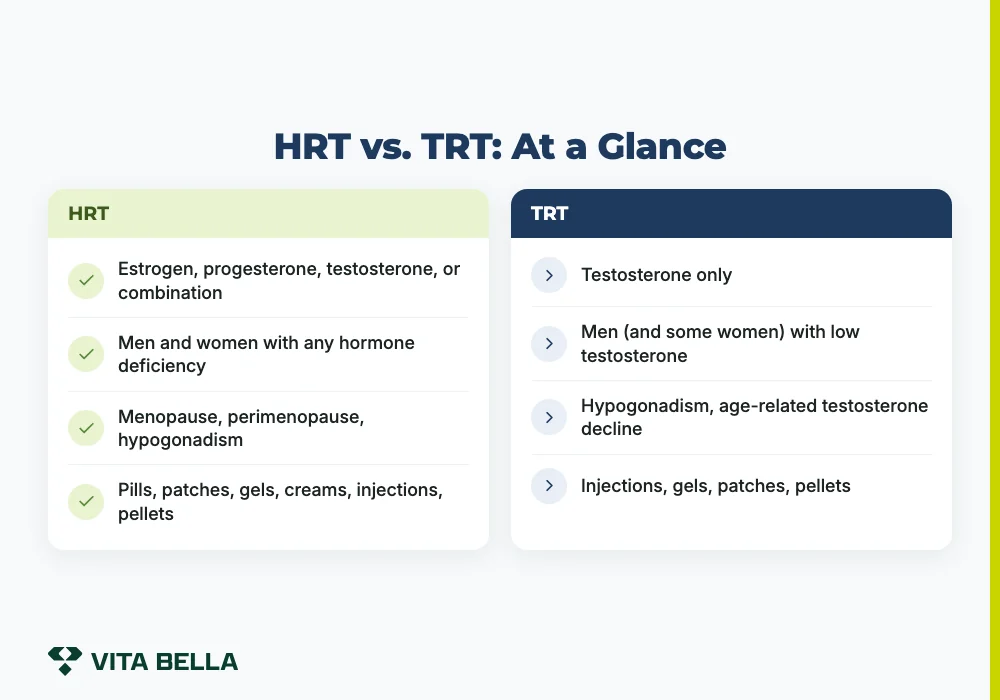
The comparison below resolves the core trt vs hrt question for anyone scanning for the short answer. Vita Bella's multi-hormone care programs cover both categories, guided entirely by your lab results from Quest Diagnostics.
DimensionHRTTRTHormones replacedEstrogen, progesterone, testosterone, or any combinationTestosterone onlyPrimary populationMen and women with any hormone deficiencyMen (and some women) with confirmed low testosteroneConditions treatedMenopause, perimenopause, hypogonadism, multi-hormone deficiencyHypogonadism, age-related testosterone declineCommon delivery methodsPills, patches, gels, creams, injections, pelletsInjections, gels, patches, pelletsTypical cost rangeVaries by protocol complexitySee member pricing
Can men get HRT instead of TRT?
Yes. When a man's labs show testosterone as the only deficient hormone, testosterone replacement therapy is the standard protocol because it targets the exact problem the panel confirmed. A broader HRT approach applies when a man presents with deficiencies across multiple hormones at once. The "hrt vs trt for men" question and the related query "is hrt the same as trt" both land in this overlap zone, where clinical judgment and lab results together make the call.
Does HRT include testosterone?
Yes. Testosterone is one of the hormones a provider may include in an HRT protocol, for both women in perimenopause and men with complex multi-hormone deficiencies. This is the overlap that makes the hrt vs trt comparison genuinely nuanced: TRT uses testosterone exclusively, while HRT may combine testosterone with estrogen or progesterone depending on the full hormonal picture.
Think of it as a Venn diagram. All TRT qualifies as HRT. Only some HRT qualifies as TRT.
Not sure which applies to your labs? Get Started with the 60-second quiz to get matched with a licensed provider.
What lab tests do you need before starting?
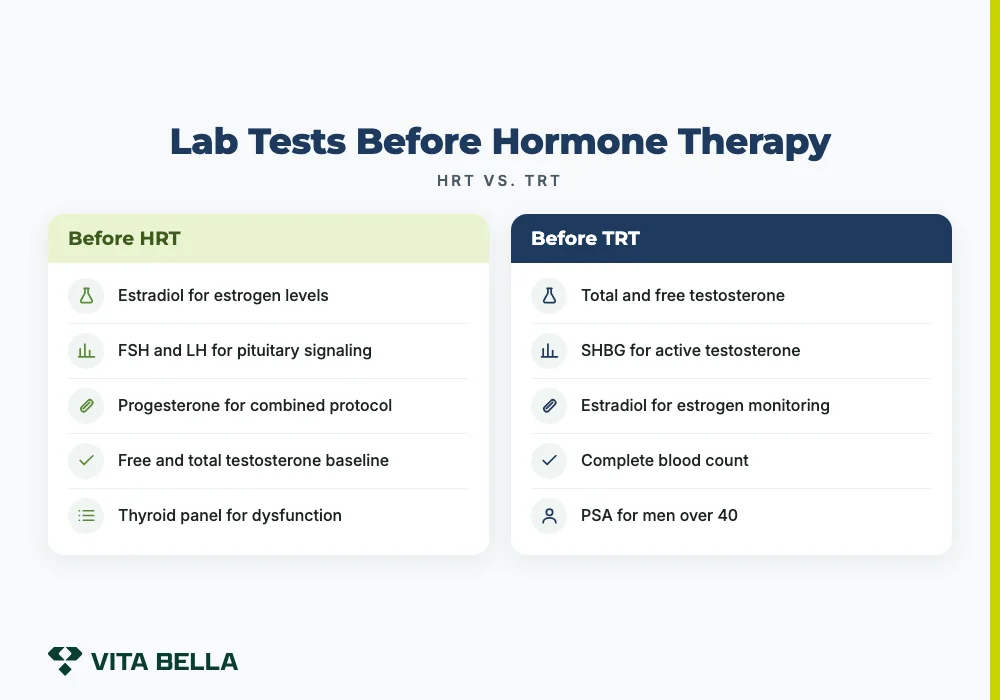
No provider should build a hormone protocol without reviewing lab results first. Quest Diagnostics panels are required before treatment begins. The specific panels differ depending on whether HRT or TRT is the likely path forward.
Before starting HRT, expect labs to include:
Estradiol (E2) to assess estrogen levels and inform dosing decisions
FSH and LH to evaluate pituitary signaling and distinguish primary from secondary hormone deficiency
Progesterone, to determine whether a combined protocol is clinically warranted
Free and total testosterone as part of the complete hormonal baseline
Thyroid panel (TSH, free T3, free T4) to rule out thyroid dysfunction as a symptom driver
Complete metabolic panel to check liver and kidney function before treatment starts
Before starting TRT, labs typically include:
Total testosterone and free testosterone to confirm deficiency and establish a numeric baseline
Sex hormone-binding globulin (SHBG), because it governs how much testosterone is biologically active in the body
Estradiol, since testosterone converts to estrogen and this level must be monitored throughout treatment
Complete blood count (CBC) to check hematocrit, which TRT can raise over time
Comprehensive metabolic panel for liver and kidney baselines before starting any exogenous hormone
PSA (prostate-specific antigen) in men over 40 as a prostate health checkpoint before therapy begins
The panels listed above map directly onto the hrt vs trt decision: a multi-hormone panel pointing to several deficiencies shifts the clinical conversation toward HRT, while isolated testosterone deficiency lands squarely in TRT territory.
How to choose: HRT vs. TRT by symptom profile
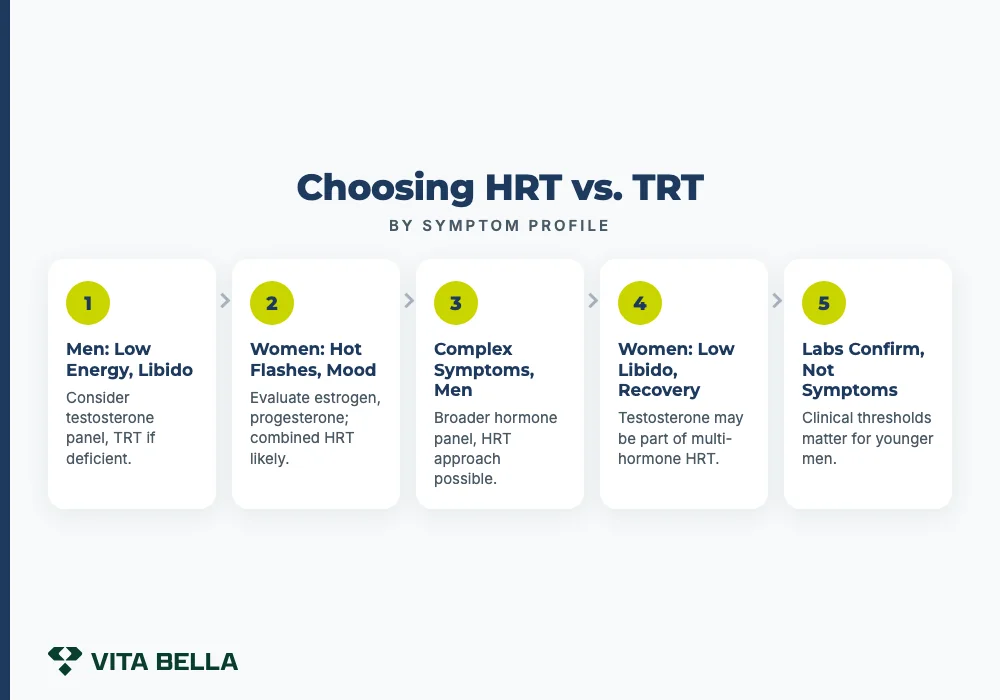
Symptoms narrow the conversation with your provider. Labs close it. Certain clusters point more clearly toward one path than the other.
Low energy, poor recovery, falling strength, and reduced libido in men typically lead to a testosterone panel first, with TRT as the likely outcome if levels confirm a deficiency.
Hot flashes, night sweats, mood changes, and irregular cycles in women usually call for an estrogen and progesterone evaluation, with combined HRT as the probable protocol.
Multiple overlapping symptoms in men, fatigue, cognitive fog, emotional instability, and low libido alongside a complex history, may indicate a broader hormone panel and an HRT approach.
Women with low libido or poor exercise recovery alongside menopausal symptoms may benefit from testosterone as part of a multi-hormone HRT plan.
Younger men reporting mainly gym-performance decline may not meet clinical thresholds for TRT; labs are the arbiter, not symptom intensity alone.
Anyone with a history of thyroid issues, sleep apnea, or chronic fatigue should have those conditions evaluated before attributing every symptom to testosterone deficiency.
Women post-hysterectomy are not progesterone candidates and may receive estrogen-only HRT rather than a combined protocol.
Why do doctors discourage HRT?
Physician caution around hormone therapy traces back primarily to a 2002 Women's Health Initiative trial that linked a specific estrogen-progestin combination to elevated cardiovascular and breast cancer risk in older postmenopausal women. Those findings do not apply to all HRT formulations, all hormone types, or patients of all ages. Current guidelines from major endocrinology bodies support individualized, provider-monitored hormone therapy that weighs each patient's risk profile against the likely benefits. The caution is real but narrow. The solution is careful provider oversight, not blanket avoidance.
What does hormone therapy cost?
Pricing is one gap no competitor in this search covers directly. Vita Bella uses a cash-pay membership model with wholesale medication access, which reduces out-of-pocket costs compared to traditional clinic billing.
Here is what the cost structure looks like:
Membership: Membership pricing is listed on the Membership page and covers provider access, quarterly 1:1 check-ins, and member wholesale medication pricing.
Initial consultation: a 45-minute visit with a licensed provider to review labs and build your protocol (the fee is listed on the Membership page).
Testosterone: available to members from $16/month for testosterone cypionate at wholesale pricing.
Free injection supplies are included for members on injectable protocols, with no pharmacy counter charge.
Lab costs: Quest Diagnostics panels are required before treatment and billed separately; cost depends on which panel your provider orders.
Shipping: discreet, unmarked delivery from FDA-inspected, state-licensed U.S. pharmacies is included for members.
Ready to find out which therapy fits you?
A licensed provider reviews your labs, builds your protocol, and checks in with you every quarter. You pick your provider from licensed clinicians across 47 states (not yet in Alabama, Arkansas, or Kansas). Free injection supplies are included, and medications ship in discreet packaging from FDA-inspected U.S. pharmacies. Take the short quiz, complete your bloodwork, and meet with your provider to get a protocol built around your actual lab results.
Frequently asked questions
TRT is a specific type of HRT that addresses testosterone deficiency exclusively. HRT is the broader category that can include estrogen, progesterone, and testosterone in any combination a provider determines is appropriate. All TRT is HRT, but not all HRT is TRT.
Yes. Women with clinically confirmed low testosterone, often identified during perimenopause or menopause, can receive testosterone therapy as part of a provider-guided protocol. Dosing for women differs significantly from male TRT protocols and requires careful monitoring throughout treatment.
Most patients notice initial improvements in energy and mood within four to six weeks of starting therapy. Full effects on body composition, libido, and strength typically develop over three to six months. A provider monitors labs at regular intervals and adjusts the protocol based on results.
Take a short intake quiz to share your symptoms, then complete required bloodwork through a partner lab such as Quest Diagnostics. A licensed provider reviews your results, builds your protocol, and schedules a quarterly check-in to track your progress.
Physician caution stems largely from a 2002 study that found elevated cardiovascular and breast cancer risk with a specific estrogen-progestin combination in older postmenopausal women; those findings do not apply to all HRT formulations, patients, or ages. Current guidelines support individualized, provider-monitored hormone therapy for appropriate candidates where benefits outweigh risks.
Think of TRT as a single-instrument performance and HRT as a full ensemble: TRT restores only testosterone, while HRT addresses whichever hormones the body is missing. If your labs flag one deficiency, TRT fits; if they flag several, HRT is the more accurate term for what your provider will build.
Sources
Xia W et al. (2025). Hormone Replacement Therapy and Cardiovascular Health in Postmenopausal Women. International journal of molecular sciences. PubMed
Braga MAP et al. (2025). Long-Term Cardiovascular Safety of Testosterone-Replacement Therapy in Middle-Aged and Older Men: A Meta-analysis of Randomized Controlled Trials. American journal of cardiovascular drugs : drugs, devices, and other interventions. PubMed
Cameron CR et al. (2024). The Art of Hormone Replacement Therapy (HRT) in Menopause Management. Journal of pharmacy practice. PubMed
Cruickshank M et al. (2024). The effects and safety of testosterone replacement therapy for men with hypogonadism: the TestES evidence synthesis and economic evaluation. Health technology assessment (Winchester, England). PubMed
Morris G et al. (2023). Hormone replacement therapy in women with history of thrombosis or a thrombophilia. Post reproductive health. PubMed
Szarpak L et al. (2026). Testosterone replacement therapy and non‑major adverse cardiovascular event safety signals: Atrial fibrillation, acute kidney injury, and pulmonary embolism. Kardiologia polska. PubMed