What are the signs that you need hormone replacement therapy? The most consistent indicators are persistent fatigue, brain fog, low libido, mood instability, poor sleep, unexplained weight gain, joint pain, and skin or hair changes. These symptoms appear in both men and women as estrogen, progesterone, and testosterone decline over time. A blood panel, not symptoms alone, is what a licensed provider uses to confirm whether hormone replacement therapy is appropriate for you.
8 signs providers commonly assess, quick reference
- Fatigue that sleep does not fix
- Brain fog or difficulty concentrating
- Low libido or sexual dysfunction
- Mood swings, anxiety, or depression
- Sleep disruption and night sweats
- Unexplained weight gain or body composition shifts
- Joint pain or muscle weakness
- Skin dryness or hair thinning
What happens when hormones decline
Estrogen, progesterone, and testosterone drop gradually in both men and women, and most people attribute the effects to stress or aging rather than their hormone levels. The decline is slow. Most people miss it. A 2024 review in the Journal of Pharmacy Practice by Cameron CR et al. notes that lab-confirmed results interpreted alongside age and health history are what drive clinical decisions, not symptom burden alone. This matters because the signs of needing hormone replacement therapy often mirror thyroid dysfunction, sleep disorders, or chronic stress.
8 signs you may need hormone replacement therapy
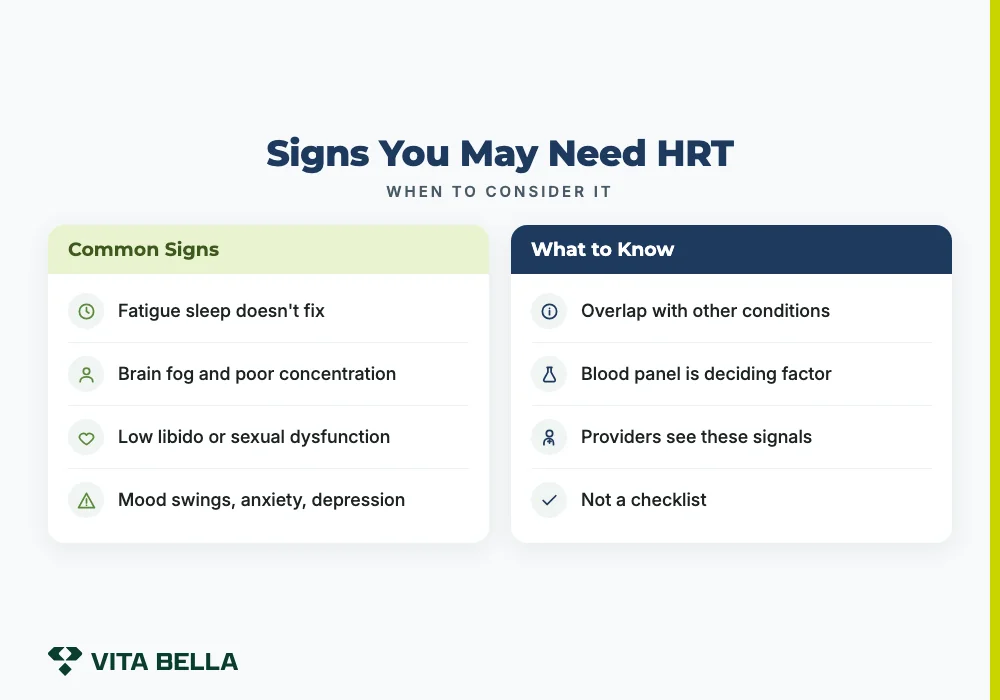
When patients search for "signs I need hormone replacement therapy," these are the eight signals providers see most consistently when evaluating HRT candidacy. They overlap with other conditions, so a blood panel is the deciding factor, not a checklist.
Fatigue that sleep doesn't fix
Low testosterone or estrogen disrupts cellular energy signaling and recovery. The result is exhaustion that persists even after seven or eight full hours of sleep. Rest stops working. This pattern applies equally to men and women and is often the first complaint that prompts someone to request a hormone panel.
Brain fog and poor concentration
Memory lapses, slow recall, and difficulty focusing are recognized cognitive symptoms of declining estrogen and testosterone. A 2023 review in International Journal of Molecular Sciences by Mills ZB et al. found connections between hormone levels, memory consolidation, and neurological function. Brain fog is one of the signs you may need hormone replacement therapy that providers see regularly in otherwise healthy, well-rested patients. Clarity disappears quietly.
Low libido or sexual dysfunction
Testosterone drives libido in both men and women, while estrogen supports vaginal tissue health and arousal in women. A drop in either hormone can significantly reduce interest or physical response. Men navigating this symptom can find more information about men's testosterone program options.
Mood swings, anxiety, or depression
Estrogen and progesterone act directly on serotonin and GABA pathways in the brain. When those hormones fall, mood instability and anxiety can follow in ways that mirror generalized depression or anxiety disorders. Ongoing psychiatric symptoms warrant a hormone panel alongside a mental-health evaluation, not a single-track response. Both tracks matter.
Sleep disruption and night sweats
Falling estrogen disrupts the hypothalamic thermostat, causing nighttime heat and broken sleep. This pattern is common in perimenopausal women but also appears in men with low testosterone, not only in full menopause. Combined with other signals on this list, sleep disruption is a meaningful indicator worth discussing with a provider.
Weight gain or body composition changes
Metabolic slowdown, visceral fat accumulation, and muscle loss are tied to hormone decline in both sexes. A 2025 review in International Journal of Molecular Sciences by Xia W et al. documents the metabolic consequences of falling estrogen in postmenopausal women, with similar mechanisms affecting testosterone-deficient men. When diet and exercise are not producing results, declining hormones are worth investigating. Numbers stop cooperating.
Joint pain or muscle weakness
Estrogen supports joint lubrication, collagen integrity, and bone density. A 2025 review in Clinical Endocrinology by Stokes G et al. confirms that estrogen decline accelerates bone resorption and connective tissue deterioration. Testosterone supports muscle protein synthesis in both sexes. Musculoskeletal decline that does not respond to rest or physical therapy may have a correctable hormonal component, and this is one of the signs you need hormone replacement therapy that most clinical articles miss entirely.
Skin and hair changes
Collagen loss from declining estrogen produces skin dryness and earlier fine lines. Hair thinning or shedding, driven by falling estrogen and testosterone, often appears alongside three or more other signs on this list. These visible changes frequently motivate someone to finally request a lab panel.
Do men and women have the same signs of hormone imbalance?
The core symptom categories are similar, but the hormones driving them differ and the timing differs. Women experience estrogen and progesterone decline during perimenopause, which can begin in the late 30s, years before full menopause. Men experience a gradual testosterone decline starting in the mid-30s that continues through the 40s and 50s.
The symptom overlap is substantial. That surprises most people. What differs is which panel a provider orders first and what the reference ranges look like for each sex. Men exploring the testosterone track can learn about low-T evaluation and clinical treatment options. Women ready to assess the full picture can review what a hormone therapy assessment covers.
How do labs confirm you need hormone replacement therapy?
A blood panel is required. Symptoms describe the picture; labs confirm it. Providers typically order estradiol, total and free testosterone, FSH, LH, and a thyroid panel. Vita Bella uses Quest Diagnostics for that testing, and results are interpreted alongside symptoms and age, not against a single cutoff number.
The essential lab testing guide for hormones and peptides explains each marker and what providers look for. For men, the SHBG and testosterone overview covers why free testosterone often matters more than the total figure alone.
What happens at your first HRT consultation?
The initial visit is a 45-minute, provider-led intake covering symptom history, lab results, health background, and treatment goals. It is not a prescription handoff. You start with a short intake quiz and a labs order through Quest Diagnostics, then meet with a licensed provider who reviews your results and outlines protocol options.
After that, you receive 1:1 provider care every quarter to assess progress and adjust the protocol as needed. Vita Bella's personalized hormone therapy program is built around this structure from the first panel onward.
If several of these signs sound familiar, the next step is a short intake quiz with Vita Bella's licensed providers. Get Started.
Ready to find out if HRT is right for you?
Your symptoms are the starting point; labs and a provider review do the rest. No self-diagnosis needed. Transform Your Life. You Owe It To Yourself. Get Started.
Frequently asked questions
Yes. Perimenopause can begin in the late 30s, and testosterone decline in men often starts in the mid-30s. Labs and a provider evaluation determine whether declining levels are clinically significant for that individual.
Yes. Thyroid dysfunction, sleep disorders, chronic stress, and nutritional deficiencies share many of these symptoms. A comprehensive panel helps a provider distinguish the root cause before any protocol is considered.
Some symptoms such as energy and sleep quality often improve within weeks of starting a protocol. Others such as body composition and bone density respond over months. Individual response varies, and providers adjust protocols at quarterly check-ins.
Persistent symptoms, particularly irregular cycles, night sweats, sleep disruption, or mood shifts alongside low estrogen or progesterone on labs, are the standard indicators providers use. Lab results combined with symptom history, not symptoms alone, drive the decision.
Sources
- Mills ZB et al. (2023). Is Hormone Replacement Therapy a Risk Factor or a Therapeutic Option for Alzheimer's Disease? Int J Mol Sci. PubMed
- Xia W et al. (2025). Hormone Replacement Therapy and Cardiovascular Health in Postmenopausal Women. Int J Mol Sci. PubMed
- Cameron CR et al. (2024). The Art of Hormone Replacement Therapy (HRT) in Menopause Management. J Pharm Pract. PubMed
- Stokes G et al. (2025). Bone Health Across a Woman's Lifespan. Clin Endocrinol. PubMed