
Testosterone pellets for women are small compressed implants inserted just under the skin in a brief office visit, dissolving over three to six months and releasing testosterone at a steady rate. They are one of several delivery methods for women with documented low testosterone, and their core trade-off is consistency versus flexibility. Because the implant requires an in-person clinic visit, women who prefer or need a telehealth-compatible path can explore injections, creams, and gels through women's telehealth care at Vita Bella, where a licensed provider manages the protocol remotely.
What are testosterone pellets, and how do they work?
A testosterone pellet is roughly the size of a grain of rice. The implant is placed just under the skin, typically near the hip or gluteal area, in a brief in-office procedure. A provider numbs the area locally, makes a small incision, inserts the pellet, and closes the site with a bandage. Most women are advised to limit strenuous activity for 48 to 72 hours after insertion.
The insertion procedure typically involves:
- Local numbing of the skin at the intended insertion site
- A small incision, typically less than a centimeter
- Placement of the pellet just beneath the subcutaneous layer
- Closure of the site with a bandage or small wound-closure strip
- A 48 to 72 hour activity restriction to allow the site to recover
Once in place, the pellet dissolves gradually and releases testosterone directly into the bloodstream over three to six months without the peaks and troughs that can come with daily or weekly dosing. The release rate depends on individual metabolism and activity level. Because the pellet cannot be removed or adjusted after insertion, accurate dosing from the outset is essential. A licensed provider determines the dose after reviewing labs before the procedure.
Pellet implants require an in-office visit. Vita Bella Health does not offer pellet implants; telehealth-compatible delivery methods are covered later in this article.
What do testosterone pellets do for women?
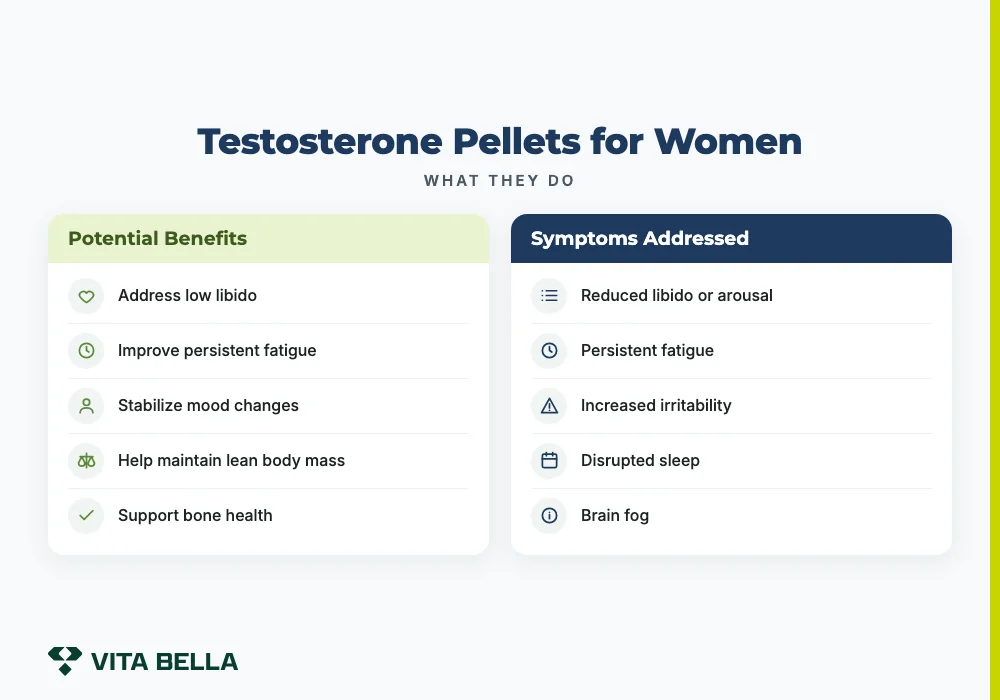
Testosterone pellets for women can help address documented symptoms of low testosterone, including low libido, persistent fatigue, mood changes, disrupted sleep, and shifts in body composition. A 2025 review in Climacteric (Davis SR) confirms that testosterone in women has roles well beyond sexual function, contributing to energy regulation, mood stability, lean mass, and bone health.
Symptoms that may indicate low testosterone in women include:
- Persistent fatigue that does not improve with rest
- Reduced libido or difficulty with arousal
- Mood changes or increased irritability
- Disrupted or non-restorative sleep
- Difficulty maintaining lean body mass
- Brain fog or reduced mental clarity
- Temperature dysregulation
Testosterone therapy for women is used off-label in the US. It is well-studied in the clinical literature and prescribed under provider oversight, with dosing individualized from labs and clinical evaluation. A 2025 review in Obstetrics and Gynecology (Kling JM) found strong evidence for testosterone in addressing hypoactive sexual desire disorder in perimenopausal and postmenopausal women, with eligibility and dosing always determined by a licensed provider.
Perimenopause vs. post-menopause: does timing matter?
Testosterone begins declining during perimenopause, often years before the final menstrual period. Women in both the perimenopausal and postmenopausal stages can present with similar symptoms and may benefit from evaluation.
Kling JM (2025) supports testosterone therapy at both stages, noting that symptom severity and baseline hormone levels vary considerably between individuals. Early assessment is discussed in the literature as a strategy for maintaining quality of life during the hormonal transition. A licensed provider determines eligibility after reviewing bloodwork, not by hormonal stage alone.
How long do testosterone pellets take to work in women?
Women often ask "how long for testosterone pellets to work", for most, initial changes in energy and mood appear within two to four weeks. Full effects of testosterone pellets for women, including improvements in libido and body composition, typically take up to three months.
The timeline varies with individual metabolism, starting hormone levels, and the specific symptoms being addressed. Kling JM (2025) notes that sexual function outcomes in clinical trials generally emerge over a similar window. Some women notice sleep improvements early, while changes in lean mass and body composition build over the full three-month cycle. A provider follows up with labs and symptom review before scheduling the next insertion.
Are testosterone pellets safe for women?
At physiological doses, testosterone pellets for women are generally well-tolerated. The primary concern specific to this delivery method is dose inflexibility once the pellet is inserted, which is distinct from the safety profile of testosterone therapy as a category.
Kling JM (2025) supports testosterone therapy at physiological doses for women with hypoactive sexual desire disorder, noting a favorable risk profile when providers monitor hormone levels over time. The critical distinction is between testosterone therapy overall, which has strong clinical evidence, and pellets as a delivery method, which carry specific procedural and dosing considerations that set them apart from adjustable options.
A provider typically assesses candidacy by reviewing:
- Documented low testosterone confirmed by bloodwork
- Clinically relevant symptoms consistent with testosterone deficiency
- Absence of contraindications
- Full health history discussed at the initial consultation
This list is informational. Specific eligibility is always determined by a licensed provider after reviewing bloodwork and medical history.
What is the testosterone pellet crash, and why does it happen?
The term "pellet crash" refers to fatigue, mood dips, and a return of earlier symptoms that some women notice toward the end of a pellet's active cycle. It is a pharmacokinetic issue, not a reason to dismiss testosterone therapy altogether.
Pellets can produce a supraphysiologic peak early in the cycle, when the pellet is dissolving most actively, followed by a trough near the cycle's end. The dose cannot be adjusted after insertion. If the cycle runs longer than expected, or the initial dose was not precisely calibrated to the individual, the woman may spend several weeks at subtherapeutic levels before the next insertion is scheduled. This is a property of the delivery method, not of testosterone therapy itself. Delivery methods with adjustable dosing, such as testosterone injections for women or daily topical formulations, avoid this specific pattern.
What side effects can testosterone pellets cause in women?
Possible side effects are uncommon at physiological doses and may include acne, increased facial or body hair, minor voice changes, or insertion-site irritation. These effects may appear during the initial weeks and are typically mild and reversible with provider monitoring.
The insertion site may remain tender for a few days after placement. Provider follow-up and regular lab review keep the protocol within the physiological range and reduce the likelihood of side effects over time.
Testosterone pellets vs. other delivery methods for women
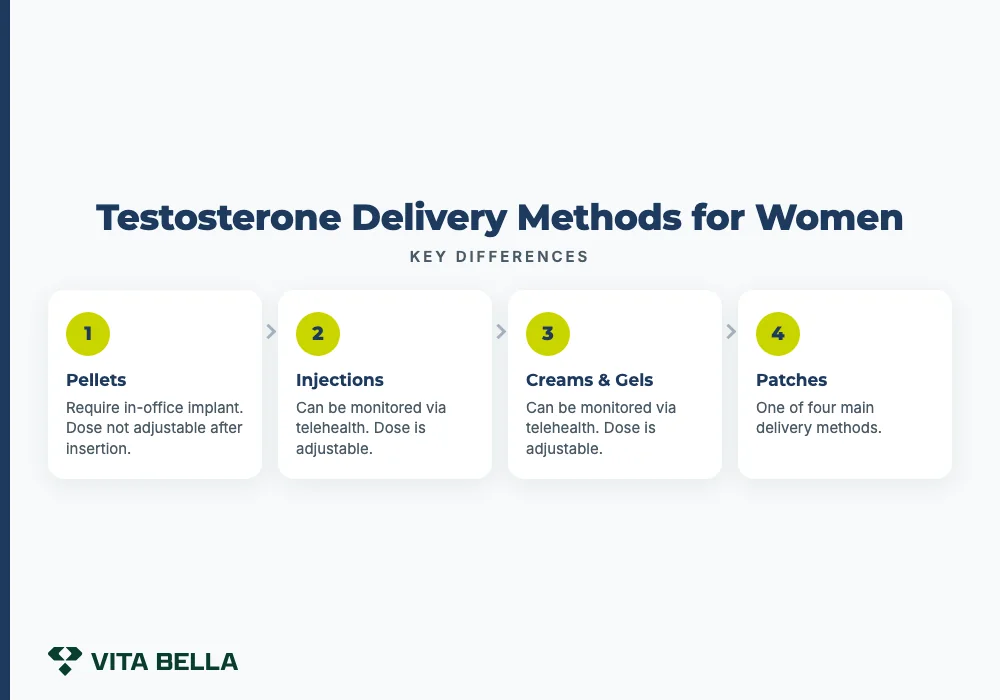
Among the options for testosterone for women, pellets are one of four main delivery methods alongside injections, creams and gels, and patches. Each differs in dosing frequency, flexibility, and whether a clinic visit is required.
Pellets are the only method that requires an in-office implant and cannot be adjusted after insertion. Testosterone injections for women, compounded gels, and creams can all be prescribed and monitored through telehealth, with the dose adjustable throughout the protocol. This flexibility matters most when hormone levels shift mid-cycle or when early symptoms suggest the starting dose needs refinement.
For a detailed look at how compounded topical testosterone works day to day, see the guide on testosterone cream for women. Some providers also prescribe testosterone and estrogen pellets for women together, addressing both hormones through a single implant cycle, with the same dose-inflexibility constraints applying to both.
A note on microdosing testosterone for women: some providers use lower-frequency injection protocols or conservative daily application of a testosterone gel for women to reduce the peak-and-trough variability that can accompany less frequent dosing. This approach, along with the evidence behind it, is covered in depth in women's testosterone therapy options.
For a broader look at how each formulation works at the molecular level, see how delivery methods differ mechanistically.
| Method | Typical duration | Dose adjustable? | In-office visit required? | Telehealth eligible? |
|---|---|---|---|---|
| Pellets | 3–6 months | No, once inserted | Yes (implant procedure) | No |
| Injections | Weekly to biweekly | Yes, by provider | No | Yes |
| Creams/Gels | Daily | Yes, by provider | No | Yes |
| Patches | 1–2 weeks | Limited | No | Yes |
Vita Bella Health offers telehealth-based testosterone therapy for women, with injections and creams available through licensed providers, quarterly provider check-ins, and labs reviewed before each protocol update. No in-office procedure is required.
What labs do women need before starting testosterone therapy?
No delivery method can be safely individualized without a baseline picture of a woman's hormone levels. For testosterone therapy, labs are ordered before the initial consultation and reviewed by the provider. Labs are ordered through Quest Diagnostics and billed separately from the membership fee.
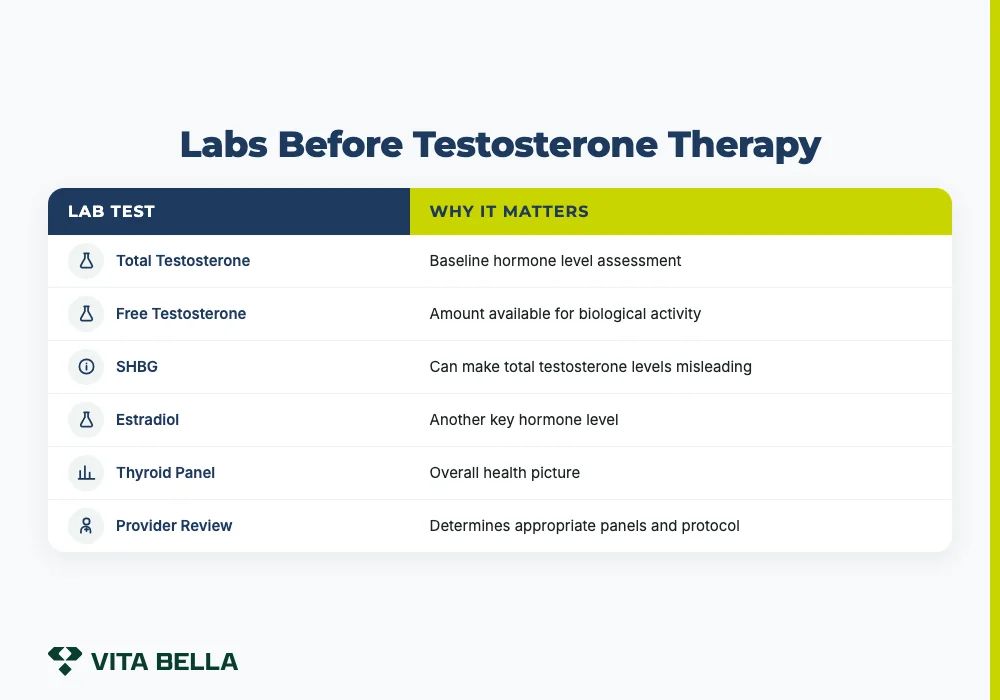
Labs commonly reviewed before testosterone therapy in women include:
- Total testosterone
- Free testosterone
- Sex hormone-binding globulin (SHBG)
- Estradiol
- Thyroid panel
- Complete blood count (CBC)
- Metabolic panel
A licensed provider determines which panels apply to the individual based on symptoms and health history.
SHBG matters here. Total testosterone levels alone can be misleading if SHBG is elevated, since the globulin binds testosterone and reduces the amount available for biological activity. See why total testosterone is not enough for a plain explanation of how free testosterone is interpreted in clinical practice.
Understanding what a "normal" lab result means versus what an optimal level looks like for a specific individual is a distinction that often drives protocol decisions. The article When "Normal" Labs Still Leave You Feeling Suboptimal covers this in full.
A provider reviews the full panel alongside symptom history to determine whether testosterone therapy is appropriate and how to structure the starting protocol. This is what individualized care at Vita Bella looks like in practice.
What to look for in a qualified testosterone therapy provider
A thorough provider starts with baseline labs and revisits them throughout the protocol. Dose adjustments follow data, not calendar dates.
For testosterone pellets specifically, the lack of post-insertion adjustability makes initial dosing accuracy critical. A provider who inserts pellets without reviewing labs first, or who does not schedule follow-up before the cycle ends, removes the ability to course-correct if the starting dose is off. This gap is a key reason many women prefer telehealth-based delivery methods with ongoing dose flexibility.
Questions worth asking any testosterone therapy provider:
- How do you determine the starting dose?
- How often do you recheck labs after the protocol begins?
- Can the dose be adjusted between cycles?
- Is telehealth available for follow-up visits?
- What delivery methods do you offer?
Vita Bella Health offers quarterly provider check-ins, with labs ordered and reviewed before each protocol update. You pick your provider from a network of licensed practitioners. Medications come with free injection supplies and are shipped discreetly from FDA-inspected, state-licensed US pharmacies. No in-office procedure is required.
Explore testosterone therapy options through Vita Bella Health
Vita Bella Health offers provider-led testosterone therapy through telehealth, with injections and creams managed by the licensed provider you select, quarterly provider check-ins, and labs reviewed before each protocol update. No in-office procedure is required.
Learn more about how the program is structured and what to expect from the first consultation through ongoing follow-up.
Frequently asked questions
Testosterone pellets for women are implanted under the skin and release a steady dose of the hormone over three to six months. A provider may prescribe them to address symptoms such as low energy, reduced libido, mood changes, and disrupted sleep associated with low testosterone levels.
Pellets typically last three to six months depending on the dose and individual metabolism. A provider schedules re-insertion before levels drop significantly, based on follow-up labs and symptom review.
Yes. Injections, creams, and gels can all be prescribed and monitored by a licensed provider through a telehealth platform. Pellet implants are the one delivery method that requires an in-person clinic visit for the insertion procedure.
The pellet crash refers to fatigue and mood changes some women notice as testosterone levels decline toward the end of a pellet's cycle. It reflects the inherent dose inflexibility of pellets, since the dose cannot be adjusted once the pellet is inserted.
Yes. Testosterone injections for women, compounded creams and gels, and a testosterone patch for women are all evidence-based alternatives that a licensed provider can prescribe and monitor through telehealth. Each differs in dosing frequency and flexibility, and a provider matches the delivery method to the individual based on labs and symptoms.
Sources
- Kling JM. (2025). Testosterone for the Treatment of Hypoactive Sexual Desire Disorder in Perimenopausal and Postmenopausal Women. Obstetrics and Gynecology. PubMed
- Davis SR. (2025). Not just sex: other roles for testosterone in women. Climacteric: the journal of the International Menopause Society. PubMed