Peptides are short amino acid chains, between 2 and 50 units, that work as signaling molecules throughout the body (Forbes & Krishnamurthy, 2020). Each one binds to a specific receptor and tells a cell what to do: repair tissue, regulate appetite, or calibrate immune activity. High receptor selectivity is the defining clinical advantage. That precision is why peptide therapy tends to produce fewer off-target effects than many conventional drugs (Lau & Dunn, 2018), making the question of what are peptides central to any evidence-based health evaluation.
Peptides, proteins, and hormones: a quick frame of reference
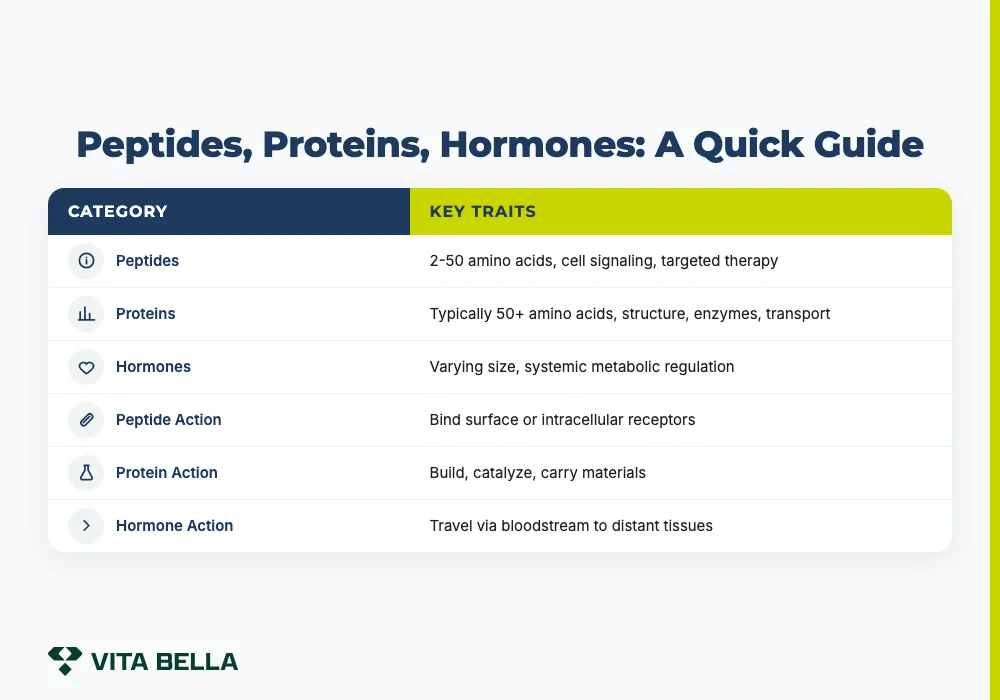
What are peptides doing differently from proteins and hormones? A direct comparison separates three categories that are often conflated.
Peptides | Proteins | Hormones | |
|---|---|---|---|
Size | 2–50 amino acids | Typically 50+ amino acids | Varies by structural class |
Primary role | Cell signaling | Structure, enzymes, transport | Systemic metabolic regulation |
How they act | Bind surface or intracellular receptors | Build, catalyze, carry materials | Travel via bloodstream to distant tissues |
Medical context | Peptide medicine, targeted therapy | Enzyme replacement | Hormone and metabolic therapy |
Peptides
Proteins
Hormones
Size
2–50 amino acids
Typically 50+ amino acids
Varies by structural class
Primary role
Cell signaling
Structure, enzymes, transport
Systemic metabolic regulation
How they act
Bind surface or intracellular receptors
Build, catalyze, carry materials
Travel via bloodstream to distant tissues
Medical context
Peptide medicine, targeted therapy
Enzyme replacement
Hormone and metabolic therapy
The boundary blurs in practice. Insulin is a 51-amino-acid peptide hormone, classified under both categories depending on the clinical context in question.
What is the difference between peptides and hormones?
A peptide is defined by structure: a chain of amino acids joined by covalent bonds. A hormone is defined by function: a substance secreted by an endocrine gland that travels through the bloodstream to regulate distant tissues. The two categories overlap but are not the same.
Endocrine hormones fall into three structural classes: peptides, steroids, and tyrosine derivatives (McLaughlin & Jialal, 2019). Peptide hormones such as insulin, glucagon, and ACTH are water-soluble and act on cell-surface receptors. Steroid hormones like testosterone and cortisol are lipid-soluble and cross cell membranes to reach intracellular receptors. Tyrosine derivatives like epinephrine open ion channels and generate rapid electrical responses (Siegel et al., 1999).
All peptide hormones are peptides, but most peptides are not hormones. Many act locally, synthesized in the brain, gut, or immune tissue, and never enter general circulation. In practice, the peptides vs hormones question is less about choosing between them and more about recognizing that both involve distinct signaling systems. A well-structured clinical program often addresses both.
How do peptides work in the body?
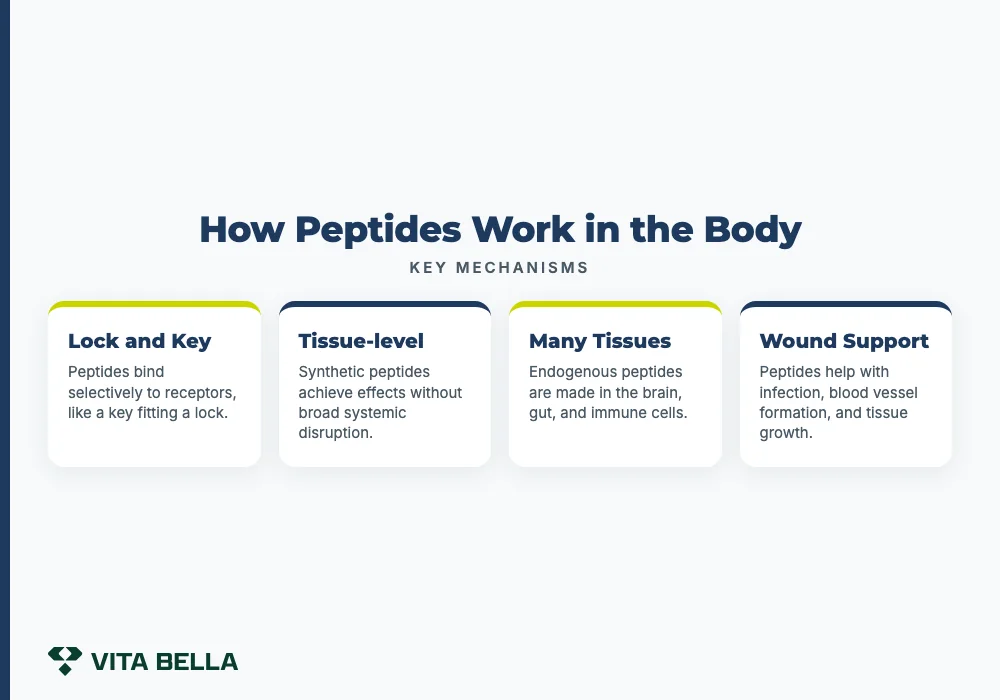
Peptides work by binding to receptors with high selectivity. Think of a lock and key. The receptor is the lock; the peptide is shaped precisely for it. That selective fit is why synthetic peptides designed to replicate natural molecular signals can achieve tissue-level effects without disrupting broad systemic function.
Endogenous peptides are synthesized across many tissues, including the brain, gut, and immune cells, where they modulate function continuously. Natural and synthetic peptides have been applied in both therapeutic and diagnostic contexts, and the high specificity of peptide-receptor binding has made them useful tools in oncology and medical diagnostics. Clinicians and researchers who ask what are peptides doing at the receptor level often find that the answer depends on tissue type, receptor density, and the concentration at which the peptide is delivered.
What are peptides doing in wound support and tissue repair?
Several peptide classes directly support wound repair and tissue regeneration. The clinical interest behind the concept of "peptide tissue support" reflects a real question: which peptide classes address which stage of the repair process, and through what signaling mechanism? Antimicrobial peptides (AMPs) manage infection risk and stimulate keratinocyte migration, the cell movement needed to close a wound (Chen et al., 2025). Angiogenic peptides promote new blood vessel formation, supplying oxygen and nutrients to damaged tissue. Cell-penetrating peptides carry therapeutic agents inside cells. Extracellular matrix-mimetic peptides provide structural scaffolding for new tissue growth (Hao et al., 2024).
Researchers are combining these peptide classes into single delivery vehicles, such as hydrogels and nanofibers, to create multifunctional dressings that address infection, vascularization, and tissue scaffolding at the same time (Chen et al., 2025). Addressing tissue repair at this level is a combination problem. Knowing which class covers which stage of the repair process matters more than selecting a single compound.
Muscle support and sarcopenia
Insulin-like growth factor-1 (IGF-1) is one of the primary regulators of skeletal muscle growth, differentiation, and repair (Ascenzi et al., 2019). Multiple isoforms exist, each with a distinct role in muscle tissue maintenance. Separately, researchers have studied peptides that inhibit myostatin, a protein that limits muscle growth. Blocking myostatin is one therapeutic avenue being investigated for muscle-wasting diseases and sarcopenia.
For those combining GLP-1 weight loss therapy with muscle-support peptides, how growth hormone peptides help protect lean mass during caloric restriction addresses a clinical gap that is easy to overlook.
Can peptides help with weight loss?
Yes, and the mechanism is specific. GLP-1 receptor agonists (GLP-1RAs) were originally developed for type 2 diabetes and are now prescribed for obesity management as well (Ard et al., 2021). These GLP-1 peptides work by slowing gastric emptying, reducing appetite signaling in the brain, and increasing post-meal satiety. Liraglutide holds regulatory approval for obesity treatment. Semaglutide has accumulated substantial clinical data supporting its metabolic effects (Ard et al., 2021).
Peptides for weight loss do something categorically different from caloric restriction alone. A GLP-1 peptide recalibrates the communication between the gut and the brain. It reduces the drive to eat before hunger becomes conscious. That is a different level of metabolic intervention.
Peptides for weight loss produce the most durable results within a broader metabolic program. A licensed provider reviews labs, hormone status, and body composition before recommending any specific approach. The dose is determined after that review, not before it. For context on how lab results inform those clinical decisions, what your labs reveal about your hormone and metabolic baseline is worth reading before any metabolic consultation.
What are peptides used for in medicine?
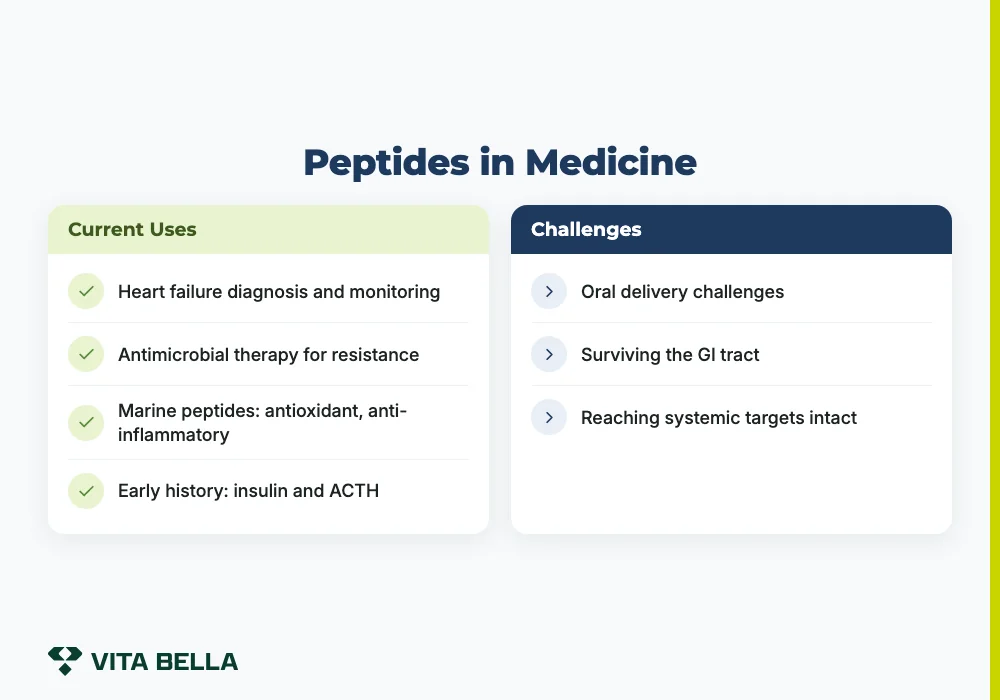
The range of peptide medicine extends well beyond metabolic management. What are peptides deployed for across clinical settings today?
Cardiovascular diagnostics. Cardiac natriuretic peptides are established biomarkers for heart failure diagnosis and severity monitoring. A 2024 review in Advances in Clinical Chemistry documents how these molecules reflect ventricular stress and guide treatment decisions (Shalmi et al., 2024).
Antimicrobial therapy. Antibiotic resistance has renewed clinical interest in AMPs. These compounds disrupt bacterial membranes through mechanisms that are harder for pathogens to evolve resistance against compared with conventional antibiotics (Oliveira Júnior et al., 2025; Bucataru et al., 2024). A 2025 Nature Reviews Microbiology paper details the structural diversity that makes AMPs particularly difficult for bacteria to escape (Oliveira Júnior et al., 2025).
Marine-derived bioactive peptides. A 2024 review in Protein and Peptide Letters identified bioactive peptides from marine organisms with antioxidant, anti-inflammatory, and antihypertensive properties (Wang et al., 2024). Food-source peptides like these demonstrate the biological range of short amino acid sequences outside pharmaceutical contexts.
Oral delivery challenges. Surviving the gastrointestinal tract and reaching systemic targets intact is a recognized problem for peptide compounds. Encapsulation strategies for short-chain bioactive peptides are an active research area (Atma et al., 2024).
The early history of peptide medicine is instructive. Insulin and ACTH were the first peptide hormones isolated from natural sources, in the early 20th century. Before those discoveries, type 1 diabetes and Addison's disease were fatal. Today roughly 600 peptide candidates are in preclinical development and around 200 are in active clinical trials (Achilleos et al., 2025). The catalog keeps growing.
Tesamorelin is one example of the modern synthetic approach: a growth hormone-releasing peptide engineered for greater stability and potency than its natural analog. See tesamorelin for a clinical breakdown of its mechanism and what providers monitor during treatment.
What are bioactive peptides?
What are peptides derived from food sources? These are called bioactive peptides, and their study has directly informed the development of pharmaceutical peptide medicine. A 2017 review in Food Quality and Safety identified more than 1,500 distinct bioactive peptides registered in the Biopep database (Sánchez & Vázquez, 2017). Sequences from fermented dairy, fish collagen, and plant proteins have shown antihypertensive, antioxidant, and anti-inflammatory activity in research settings.
The practical difference between dietary bioactive peptides and pharmaceutical peptide wellness programs is scale and precision. Food-derived peptides produce modest, diffuse physiological effects. Therapeutic peptides are engineered or selected for potency, receptor selectivity, and specific clinical outcomes. Both share the same structural logic, and the science of bioactive peptides in food has historically informed clinical peptide research.
Are peptides safe to use?
Safety depends on which peptide is used, how it is sourced, and whether a qualified provider oversees the protocol. The regulatory landscape is more nuanced than for standard small-molecule drugs.
The FDA and European Medicines Agency (EMA) have established evaluation criteria for peptide market authorization applications, including immunogenicity assessment and purity standards (Mitra et al., 2020). Immunogenicity, the potential for a peptide to trigger anti-drug antibodies, is a primary safety concern in clinical trials because it can reduce efficacy and introduce unpredictable variables (Achilleos et al., 2025). These frameworks exist because peptide development does not fit within standard small-molecule or biologic regulatory categories.
The clinical context is not optional. A therapeutic peptide prescribed by a licensed provider, sourced from FDA-inspected U.S. pharmacies, and monitored through regular labs occupies a different risk profile than an unregulated supplement with a peptide-sounding name. Provider oversight makes the difference.
What to expect from a provider-led peptide wellness plan
Most coverage of peptides stops at mechanisms. What gets skipped is the clinical process that separates a responsible peptide wellness program from guesswork.
A licensed provider starts with symptoms: energy, recovery, sleep quality, body composition, and cognitive function. Labs follow. Bloodwork establishes a baseline that no symptom questionnaire can replace. The provider reviews those results in clinical context, weighing them against what is optimal for function, not just against a broad reference range. Dosing is determined after that review, based on individual lab results, medical history, and stated goals. No dosing happens before the clinical picture is clear.
The program continues under monitoring. Peptide therapy benefits become more consistent and more predictable when tracked over time. Periodic labs and check-ins allow the provider to adjust the protocol as your body responds. How providers design and adjust peptide protocols across multiple cycles goes deeper on what that ongoing management involves in practice.
Vita Bella's provider-led model covers labs, protocol design, and quarterly follow-up within a membership structure. Every protocol reflects your bloodwork, not a generic starting point.
Start your peptide wellness evaluation
What are peptides capable of for your specific health goals? The answer starts with a clinical review, not a guess. A provider consultation grounded in your labs and symptoms is the only starting point that produces a protocol worth following.
Frequently asked questions
Peptides are short amino acid chains, typically 2 to 50 units, that act primarily as signaling molecules. Proteins are larger chains that perform structural and functional roles such as building tissue, catalyzing reactions, or transporting materials. The boundary overlaps: some peptide hormones like insulin fall into both categories depending on how they are classified.
All peptide hormones are peptides, but not all peptides are hormones. A hormone is defined by function: it is secreted by an endocrine gland and carried through the bloodstream to regulate distant tissues. Many peptides act locally within a single tissue and never enter general circulation.
"Peptide tissue support" describes the tissue-support and repair functions associated with specific peptide classes. In clinical research, these functions are addressed through distinct mechanisms, antimicrobial peptides manage infection risk, angiogenic peptides support vascular regrowth, and extracellular matrix-mimetic peptides provide structural scaffolding, rather than through a single compound.
GLP-1 receptor agonists are a well-studied class of peptides used in approved obesity treatment programs. They work by slowing gastric emptying, reducing appetite signaling, and increasing post-meal satiety. A licensed provider determines the appropriate approach based on individual labs and metabolic history.
Therapeutic peptides prescribed by a qualified provider and sourced from FDA-inspected U.S. pharmacies are considered safe within a monitored clinical program. Immunogenicity and purity are the primary safety variables evaluated under FDA and EMA guidance. Unregulated peptide products purchased without a prescription carry unknown risks.
Peptide medicine covers weight management, metabolic health, tissue repair, cardiovascular diagnostics, and antimicrobial therapy, among other applications. The appropriate peptide and protocol depend entirely on a provider's assessment of individual labs, symptoms, and health goals. There is no universal protocol; everything follows from clinical evaluation.
Sources
Lau, J. L., & Dunn, M. K. (2018). Therapeutic peptides: Historical perspectives, current development trends, and future directions. Bioorganic & Medicinal Chemistry. PubMed
Sánchez, A., & Vázquez, A. (2017). Bioactive peptides: A review. Food Quality and Safety. PubMed
Forbes, J., & Krishnamurthy, K. (2020). Biochemistry, Peptide. StatPearls. PubMed
Siegel, G. J., Agranoff, B. W., Albers, R. W., et al. (1999). Basic Neurochemistry. Lippincott-Raven. PubMed
McLaughlin, M. B., & Jialal, I. (2019). Biochemistry, Hormones. StatPearls. PubMed
Chen, Z., Meng, L., Sethi, G., Wang, J., & Li, B. (2025). Peptide-driven approaches in advanced wound healing materials. Drug Discovery Today. PubMed
Ard, J., Fitch, A., Fruh, S., & Herman, L. (2021). Weight loss and maintenance related to the mechanism of action of glucagon-like peptide 1 receptor agonists. Advances in Therapy. PubMed
Ascenzi, F., Barberi, L., Dobrowolny, G., et al. (2019). Effects of IGF-1 isoforms on muscle growth and sarcopenia. Aging Cell. PubMed
Mitra, M. S., DeMarco, S., Holub, B., Thiruneelakantapillai, L., & Thackaberry, E. A. (2020). Development of peptide therapeutics: A nonclinical safety assessment perspective. Regulatory Toxicology and Pharmacology. PubMed
Achilleos, K., Petrou, C., Nicolaidou, V., & Sarigiannis, Y. (2025). Beyond efficacy: Ensuring safety in peptide therapeutics through immunogenicity assessment. Journal of Peptide Science. PubMed
Oliveira Júnior, N. G., et al. (2025). Antimicrobial peptides: Structure, functions and translational applications. Nature Reviews Microbiology. PubMed
Wang, P., et al. (2024). Bioactive peptides from marine organisms. Protein and Peptide Letters. PubMed
Bucataru, C., et al. (2024). Antimicrobial peptides: Opportunities and challenges in overcoming resistance. Microbiological Research. PubMed
Hao, Z. W., et al. (2024). Bioactive peptides and proteins for tissue repair: Microenvironment modulation, rational delivery, and clinical potential. Military Medical Research. PubMed
Shalmi, T. W., et al. (2024). Cardiac natriuretic peptides. Advances in Clinical Chemistry. PubMed
Atma, Y., et al. (2024). Encapsulation of short-chain bioactive peptides (BAPs) for gastrointestinal delivery: a review. Food & Function. PubMed
For educational purposes only. Not a substitute for medical advice, diagnosis, or treatment. Consult a licensed healthcare provider before making any changes. A licensed provider will determine if a prescription is appropriate after evaluation. Individual results vary. Compounded medications are not FDA-approved for safety, efficacy, or quality.