


Testosterone optimization helps men over 50 feel stronger and healthier. It may improve energy, muscle strength, sex drive, and daily performance. TRT is one option, but it is not the only choice. Healthy habits, peptide therapy, and other treatments may also help. Regular testing helps track your progress and supports safe, effective results.
At Vita Bella, we take a personal approach to hormone health. We start with detailed testing to understand your needs. Then, we build a plan that fits your goals. Your plan may include healthy lifestyle changes, peptide therapy, and other hormone support options. For men with clinically low testosterone, treatment options such as Testosterone Cypionate may be considered when appropriate. We guide you through each step and help you stay on track as your needs change over time.
Why Does Testosterone Drop After 50 and How Can You Feel Better?
Testosterone often drops precipitously as you get older. This change can start in midlife and continue with age. Low levels may affect how you feel each day. You may have less energy, less interest in sex, and less strength. You may also find it harder to recover after exercise.
Signs of low testosterone may include:
Low energy
Low sex drive
Trouble with erections
Loss of muscle
More body fat
Slow workout recovery
Less stamina
Trouble focusing
Mood changes
Low motivation
When hormone levels improve, you may notice:
More energy
Better sex drive
Better physical performance
Faster recovery
Better muscle health
More daily motivation
Research supports a link between low testosterone and several common symptoms in older men. A study in The New England Journal of Medicine [1] found links between low testosterone, low sex drive, erection problems, fatigue, and low physical vigor. For this reason, hormone testing can help find the cause of your symptoms and guide treatment.
How Can SERMs Help Raise Testosterone After 50?
SERMs may help raise testosterone levels in some men. Unlike TRT, they do not add testosterone to the body. Instead, they help your body make more of its own testosterone. Because of this, SERMs may be an option for men who want a more natural approach to hormone support.
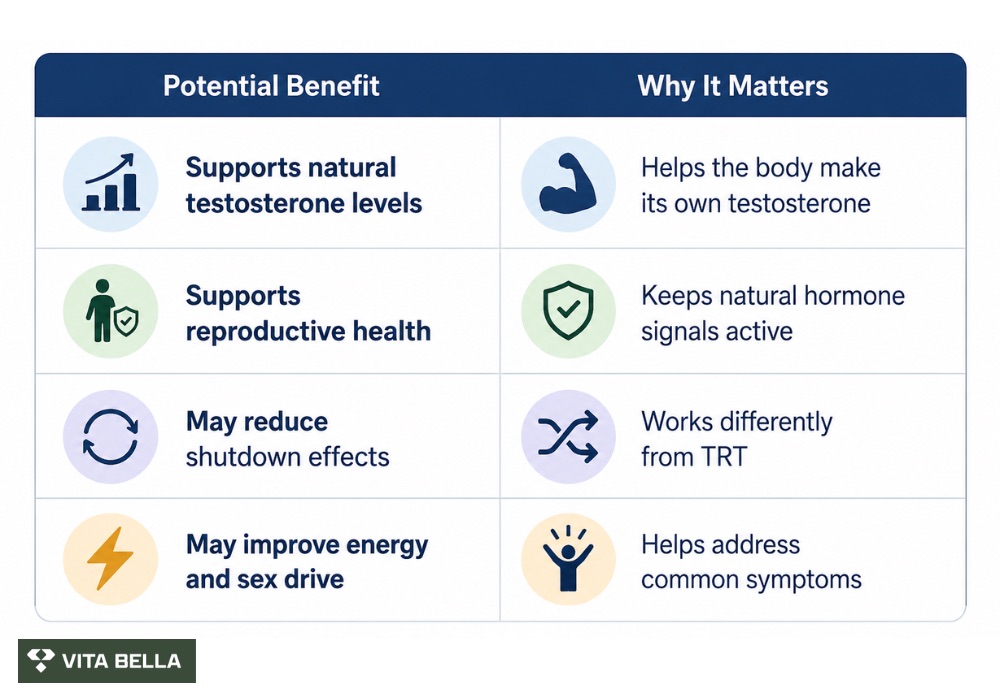
SERMs work through signals between the brain and the testes. These signals tell the testes to make more testosterone. As a result, some men may see higher testosterone levels. They may also notice better energy, improved sex drive, and better overall well-being. However, regular testing is still important during treatment.
Research supports this approach. In the study in The Journal of Sexual Medicine [2], men with low testosterone saw a clear rise in testosterone levels after treatment. The researchers found that clomiphene helped the body make more of its own testosterone. Therefore, SERMs may offer another option for some men with low testosterone when used under medical guidance.
Can GH-Supporting Peptides Help Optimize Testosterone, Recovery, and Performance?
Yes, GH-supporting peptides may help support healthy aging, recovery, and physical function. Unlike testosterone therapy, they do not replace hormones. Instead, they may encourage the body to release more growth hormone at night when it’s naturally released. Because growth hormone helps maintain muscle and metabolic health, some men use these peptides as part of a broader hormone optimization plan.
Many men's health programs combine GH-supporting peptides with lifestyle changes and hormone optimization strategies. This approach aims to support recovery, sleep quality, and muscle health. However, results vary from person to person. For this reason, treatment should always begin with proper testing and a personalized health assessment.
Research shows that growth hormone plays an important role in body composition as men age. In the study by the National Library of Medicine [3], men who received growth hormone experienced increases in lean body mass and decreases in body fat. The researchers also concluded that lower growth hormone activity contributes to age-related changes in muscle and fat tissue. These findings highlight the important role of growth hormone in maintaining physical health during aging.
What Lifestyle Strategies Help Boost Testosterone Naturally and Support Hormone Health?
Healthy habits can help support testosterone levels and long-term hormone health. In fact, lifestyle choices often strongly affect how your hormones function. Good sleep, regular exercise, healthy food choices, and stress control work together to support energy, and recovery.
Quality Sleep
Sleep is essential for healthy testosterone and growth hormone levels as most hormone release occurs during deep sleep cycles. When sleep quality drops, hormone production can also decline. Aim for seven to nine hours of sleep each night.
Research shows that sleep plays an important role in testosterone production. The study in JAMA [4] found that one week of restricted sleep reduced daytime testosterone levels by 10% to 15%. The researchers also reported lower vigor scores during sleep restriction. These findings highlight the value of quality sleep for maintaining healthy testosterone levels.
Nutrient-Dense Nutrition
Food provides the nutrients your body needs to make hormones. Focus on lean protein, healthy fats, fruits, vegetables, and whole foods. These foods support overall health and help your body function at its best. A balanced diet also supports a healthy weight, which is important for hormone health.
Regular Strength Training
Strength training supports muscle growth, improves bone density, can help with balance which is crucial as we age to prevent falls. It can also help maintain a healthy body weight through lean muscle mass improvements. Just don’t overdue it - combine exercise with proper rest and recovery.
Stress Management and Weight Control
Long-term stress can affect hormone balance. High stress often leads to higher cortisol levels, which may interfere with normal hormone function and can impact immune function (you don’t want to get sick more often). Managing stress and maintaining a healthy weight can support better hormonal balance over time.
How Important Are Monitoring Protocols During Testosterone Optimization Programs?
Regular checkups play a key role in testosterone optimization. Hormone levels do not stay the same over time. Your body can also respond differently as treatment continues. Because of this, your provider should review your progress regularly. These visits help track results, support your health, and make sure your treatment stays on the right path.
Good monitoring looks at more than testosterone alone. Your provider may also check other hormone levels and basic health markers. These tests give a clearer picture of how your body responds to treatment. They can also help identify changes before they become bigger concerns. As a result, monitoring helps support both short-term results and long-term health.
Research shows that regular follow-up is an important part of testosterone therapy. The Journal of Clinical Endocrinology and Metabolism [5] recommends checking symptoms, side effects, testosterone levels, and blood counts during treatment. These checks help show how treatment is working and help keep care safe over time.
Take Control and start Testosterone Optimization Today
If you struggle with low energy, reduced strength, poor recovery, or a lower sex drive, everyday activities may become more challenging. You may find it harder to exercise, maintain muscle, or stay consistent with healthy habits. Over time, these changes can affect your confidence, physical performance, and overall well-being.
At Vita Bella, we help you take a personalized approach to hormone health. We use advanced testing, lifestyle guidance, peptide therapies, and customized testosterone optimization plans to support your goals. When clinically appropriate, options such as Testosterone Cypionate may be included to help support healthy testosterone levels. We focus on safe, evidence-based care that fits your needs. If you are ready to improve your energy, strength, and overall well-being, schedule a consultation with us today.
Frequently asked questions
Many men notice small changes within days to weeks. You may feel more energy and better focus first. Other changes take more time. For example, gains in strength and muscle often happen over several months. Your results depend on your health, daily habits, and the type of treatment you use.
Yes, it may help. Testosterone helps support muscle health and can help slow muscle breakdown which is common with aging, referred to as sarcopenia. Low levels can make it harder to keep muscle and strength. When hormone levels improve, it may become easier to stay active. Exercise and healthy eating also play a big role in maintaining muscle as you get older.
In some cases, yes. Healthy habits can support hormone health. Good sleep, regular exercise, stress control, and a healthy weight all help. Some men may also benefit from treatments that help the body make more of its own testosterone. The right option depends on your needs.
Men with low energy, low sex drive, poor recovery, or loss of strength may benefit from an evaluation. These symptoms can affect daily life and overall well-being. However, testing is important. It helps determine if low testosterone or another issue may be causing your symptoms.
Many health issues can cause symptoms that look like low testosterone. Testing helps identify the true cause, gives a clear picture of your hormone levels, and ensures your healthy enough to initiate treatment.