


Testosterone and sleep affect each other. Healthy testosterone levels support deep, restful sleep. In turn, quality sleep helps your body produce testosterone. When sleep suffers, testosterone levels can drop. As a result, you may feel tired and recover more slowly. However, sleep apnea, stress, and other health issues can still cause fatigue, even during testosterone therapy.
At Vita Bella, we take a complete approach to your health. We look at your sleep patterns, recovery, lifestyle habits, and hormone balance. Based on your needs, we may recommend TRT, peptide options, and practical wellness strategies. Our goal is to help you sleep better, feel more energized, and achieve lasting improvements in recovery and overall well-being.
How Does Testosterone Affect Sleep Quality and REM Sleep?
Testosterone and sleep work together. Good sleep helps your body make testosterone. In turn, healthy testosterone levels support better sleep. Most testosterone is released during deep sleep. Therefore, poor sleep can lower hormone levels. Over time, this may reduce energy, affect mood, and slow recovery.
In addition, each stage of sleep supports different functions in the body.
Deep sleep helps your body produce most of its nightly testosterone. It also supports physical recovery.
REM sleep supports brain health. It helps with memory, learning, and emotional balance.
Poor sleep can disrupt normal hormone production. As a result, testosterone levels may fall.
Low testosterone may lead to low energy, poor focus, and reduced motivation.
Waking up often during the night can interrupt restorative sleep. This can affect hormone balance.
Healthy testosterone levels may support better sleep quality and improved daytime performance.
Research shows a clear link between sleep and testosterone. A JAMA [1] study found that healthy men who slept only 5 hours per night for 1 week had daytime testosterone levels 10% to 15% lower. The men also reported less energy as sleep loss continued. These findings show that getting enough sleep is important for healthy testosterone levels and daily vitality.
Can Testosterone Therapy Cause or Worsen Sleep Apnea Symptoms?
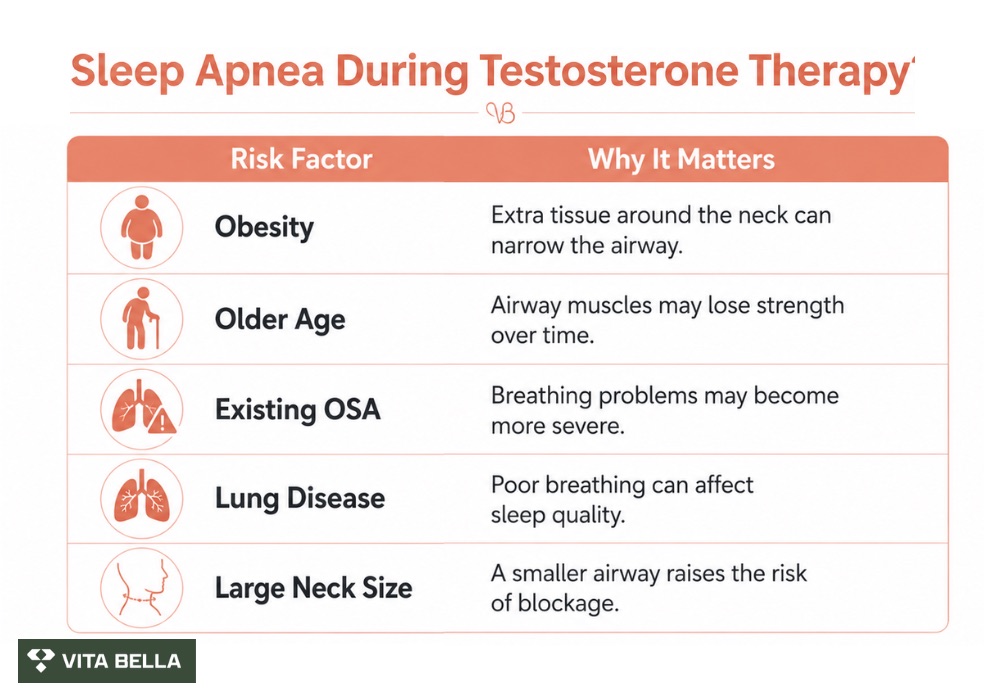
Testosterone therapy may worsen sleep apnoea symptoms in some men. This risk is higher in those who already have sleep-related breathing problems. Obstructive sleep apnea (OSA) occurs when the airway becomes blocked during sleep, causing breathing to stop and start repeatedly.
Common symptoms include loud snoring, gasping during sleep, morning headaches, and daytime tiredness. Recognising symptoms early can help prevent ongoing fatigue and poor recovery.
Loud Snoring: Loud snoring may indicate repeated airway obstruction during sleep.
Gasping During Sleep: Gasping or choking can occur when breathing briefly stops and restarts.
Morning Headaches: Low oxygen levels during the night may contribute to morning headaches.
Daytime Sleepiness: Poor-quality sleep can reduce focus, alertness, and daily energy.
Frequent Awakenings: Repeated sleep interruptions may limit restorative sleep and recovery.
For this reason, many healthcare providers recommend checking for sleep apnea before starting testosterone therapy. A sleep study can identify hidden breathing problems. It can also provide useful information for future monitoring. Men who notice new symptoms after starting treatment should seek medical advice promptly.
A review published in The World Journal of Men’s Health [2] found that testosterone replacement therapy may worsen obstructive sleep apnea in some men. The authors also recommended assessing sleep apnea symptoms before and after treatment. In addition, men who develop symptoms during therapy may need further sleep testing. These findings show why regular sleep monitoring is an important part of testosterone care.
Why Do Some Men Feel Fatigued Despite Testosterone Therapy and Good Hormone Levels?
Some men still feel tired even when testosterone levels are in a healthy range. This happens because energy depends on more than hormones alone. Sleep quality, stress, nutrition, and recovery habits also affect how you feel. Therefore, ongoing fatigue may indicate other health issues that require attention.
Hidden Sleep Disorders
Sleep disorders can reduce energy even when testosterone levels are normal. Sleep apnea, frequent awakenings, and poor sleep efficiency may limit recovery. As a result, your body may not get the restorative sleep it needs. This can lead to daytime tiredness and lower performance.
Inadequate REM and Deep Sleep
REM sleep and deep sleep help the body recover each night. They also support brain function and hormone regulation. However, some men spend too little time in these important sleep stages. Consequently, they may experience fatigue, poor focus, and lower motivation.
Stress and Recovery Challenges
Long-term stress can make recovery more difficult. It may affect sleep quality and leave you feeling drained. In addition, busy schedules and poor sleep habits can increase physical and mental fatigue. Over time, these factors can reduce daily energy levels.
Nutritional and Metabolic Factors
Your body needs key nutrients to produce energy. Low levels of iron, vitamin D, or vitamin B12 may contribute to fatigue. Thyroid problems and insulin resistance can also affect how you feel. Therefore, routine health checks can help identify hidden causes of low energy.
Overtraining and Poor Recovery Habits
Regular exercise supports overall health. However, excessive training without adequate rest can increase fatigue. Recovery requires sleep, proper nutrition, and rest days. Without these factors, energy levels may decline even when hormone levels are normal.
Looking Beyond Hormone Numbers
Testosterone is only one part of the health picture. Sleep, nutrition, stress, and physical recovery all play important roles. A broader assessment can help uncover issues that hormone testing alone may miss. This approach often provides a clearer path toward better energy and well-being.
A study in The Clinical Respiratory Journal [3] found a strong link between testosterone levels and fatigue in men with sleep apnea. The researchers reported that testosterone was the only independent predictor of physical fatigue and reduced activity. They also found that fatigue increased with greater sleep apnea severity. These findings show that both hormone status and sleep-related breathing disorders can affect daily energy levels.
What Supportive Interventions Can Improve Sleep, Recovery, and Testosterone Results?
Several simple steps can improve sleep, recovery, and testosterone health. Good sleep habits are one of the most important. Regular exercise also supports hormone balance and recovery. In addition, maintaining a healthy weight can improve sleep quality. Managing stress and following a regular sleep schedule can further support energy throughout the day.
Healthy sleep starts with a consistent routine. Try to go to bed and wake up at the same time each day. Regular exercise can improve sleep and support healthy testosterone levels. Weight loss may help reduce sleep apnea symptoms in some men. Stress management techniques, such as relaxation exercises, may also improve sleep. Sleep tracking and oxygen monitoring can also help identify hidden sleep problems.
A review published in the Asian Journal of Andrology [4] found that poor sleep quality and sleep disorders can lower testosterone levels. The author also reported that healthy sleep is important for normal testosterone production. In addition, weight loss was linked to higher testosterone levels in obese men. These findings show that better sleep and healthy lifestyle habits can support hormone health and recovery.
Take Action to Optimize Testosterone, Sleep Quality, and Recovery Today
Poor sleep quality, persistent low energy, and slow physical and mental recovery can make daily tasks significantly harder. You may wake up feeling unrested or struggle to stay focused during the day. These ongoing problems can negatively affect your work performance, workout results, mood stability, and overall quality of life.
At Vita Bella, we look beyond hormone numbers. We help find the factors that may affect your sleep, energy, and recovery. Your plan may include TRT, peptide therapies, and simple lifestyle changes. We work with you to improve sleep, boost energy, and support better recovery. Contact us today and learn how we can help.
Frequently asked questions
Better sleep can support testosterone production within days to weeks. However, results vary from person to person. Factors such as age, overall health, and sleep quality all play a role. Consistent sleep habits often provide the best results. Therefore, long-term sleep improvement is important for hormone health.
Yes. Shift work can disrupt your normal sleep cycle and hormone rhythm. As a result, your body may produce less testosterone over time. In addition, irregular sleep can reduce recovery and increase fatigue. Maintaining a consistent sleep routine whenever possible may help reduce these effects.
Yes. Alcohol can interfere with deep sleep and REM sleep. These stages are important for hormone production and recovery. Frequent alcohol use may also affect testosterone levels and sleep quality. Therefore, limiting alcohol intake may support better sleep, energy levels, and overall hormonal health.
Yes. Poor sleep may limit the benefits of testosterone therapy. Even when hormone levels improve, inadequate sleep can affect energy, recovery, mood, and focus. As a result, you may not feel the full benefits of treatment. Addressing sleep problems can help improve overall outcomes.
A sleep study may be helpful if you snore loudly, wake up gasping, or feel tired during the day. These symptoms can suggest an underlying sleep disorder. Early testing can identify problems that affect recovery and energy. It may also help guide safer and more effective treatment decisions.